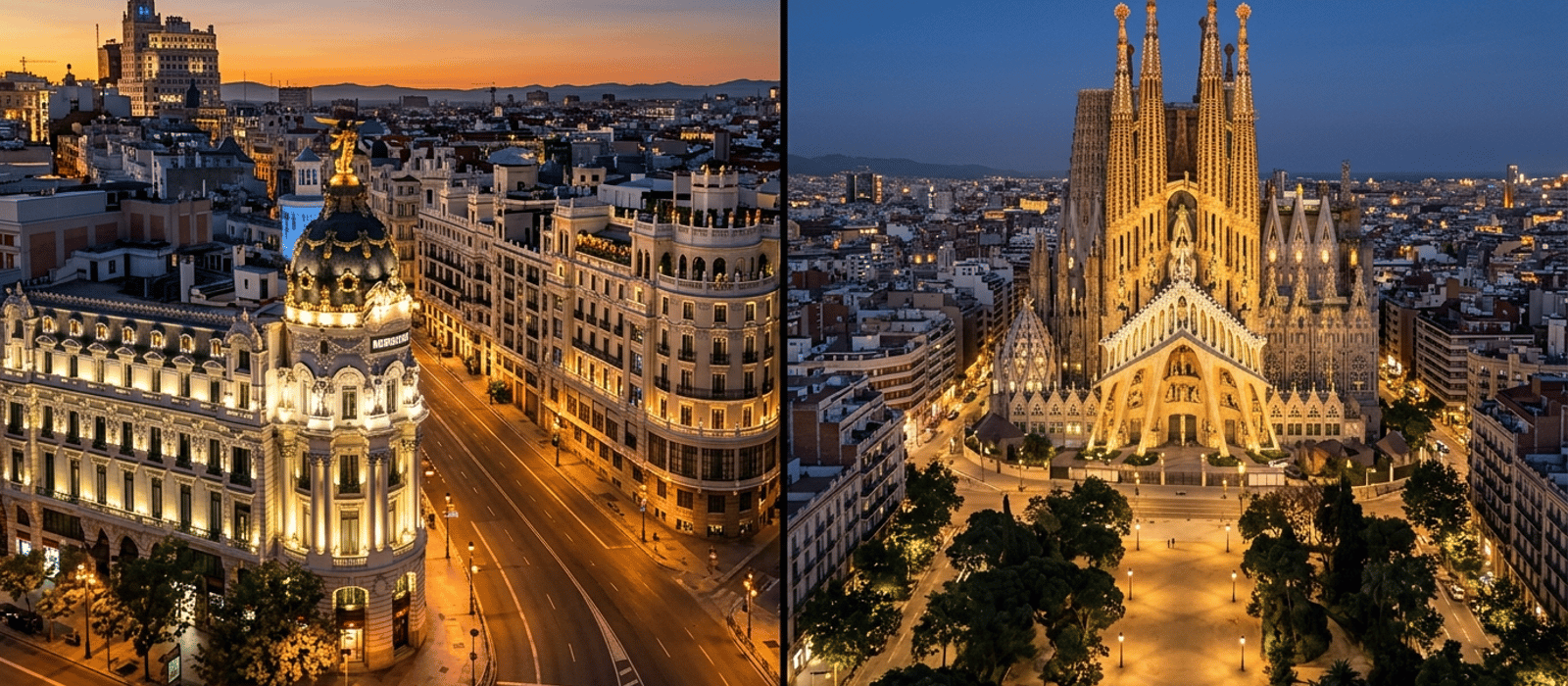
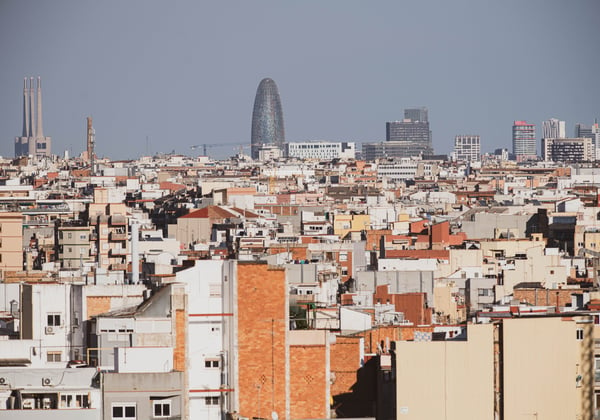
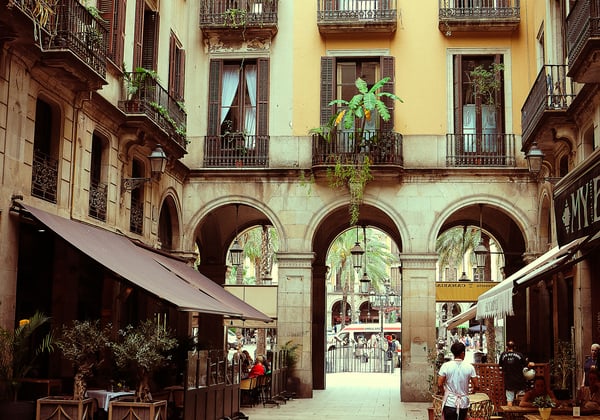
Barcelona and Madrid in ten days is the classic two-city Spain trip, and it works beautifully — two world-class cities, utterly different in character, linked by a 2.5-hour high-speed train. The keys to doing it well are booking an open-jaw flight (into one city, home from the other), giving each city enough time to breathe, and using the train rather than flying between them. Here's a ten-day plan that balances both, with a day trip from each.
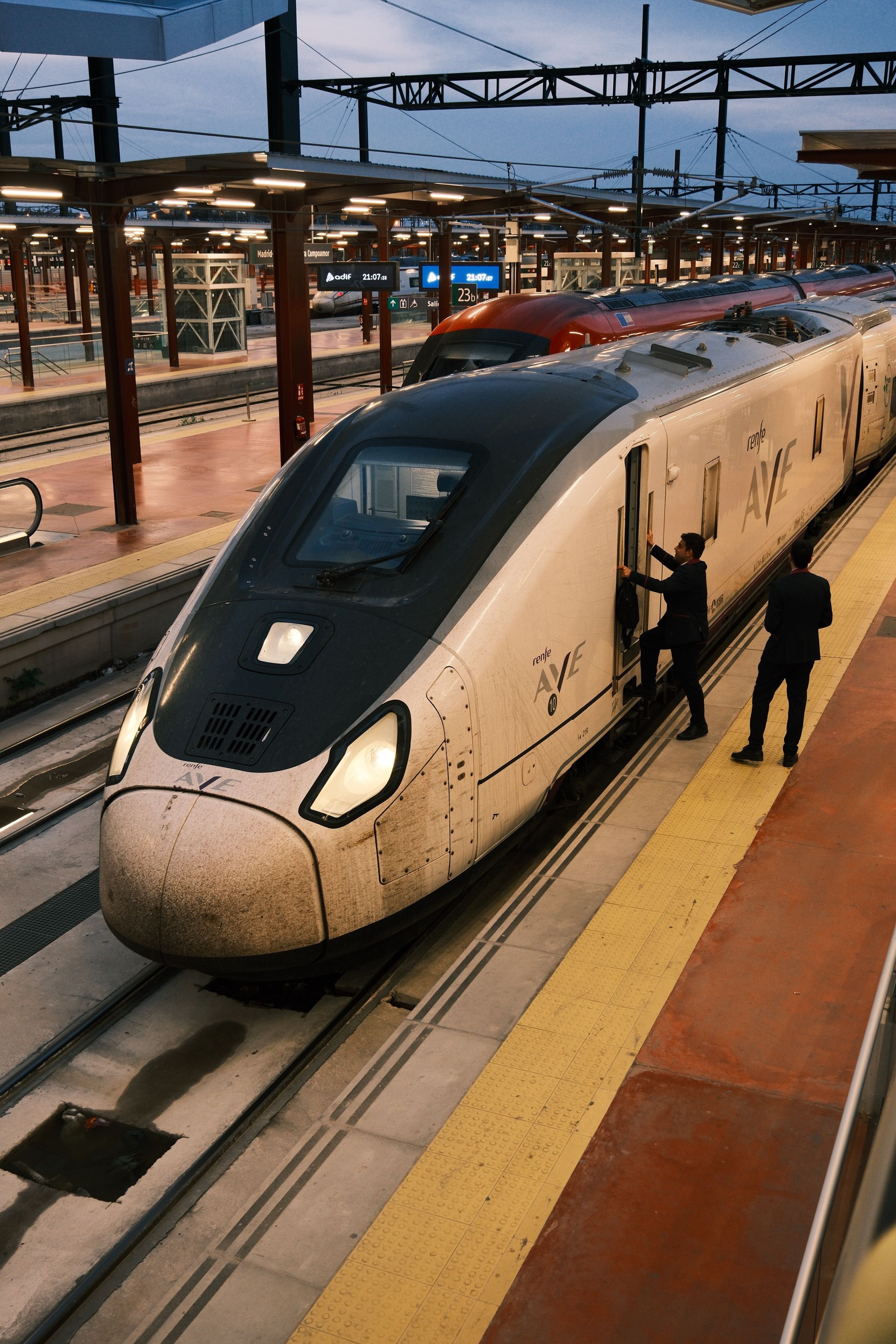
Barcelona ↔ Madrid — 2.5 h by AVE
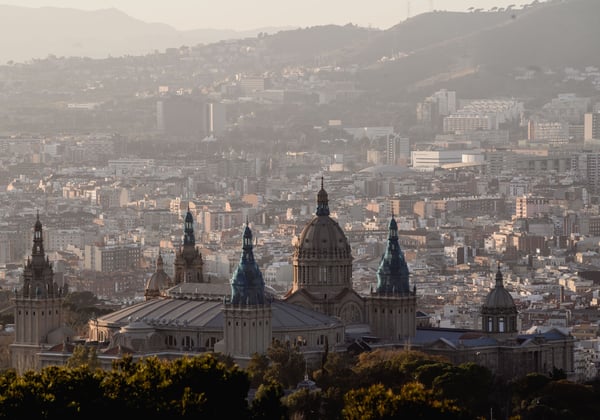
Barcelona Sants — Main long-distance train station
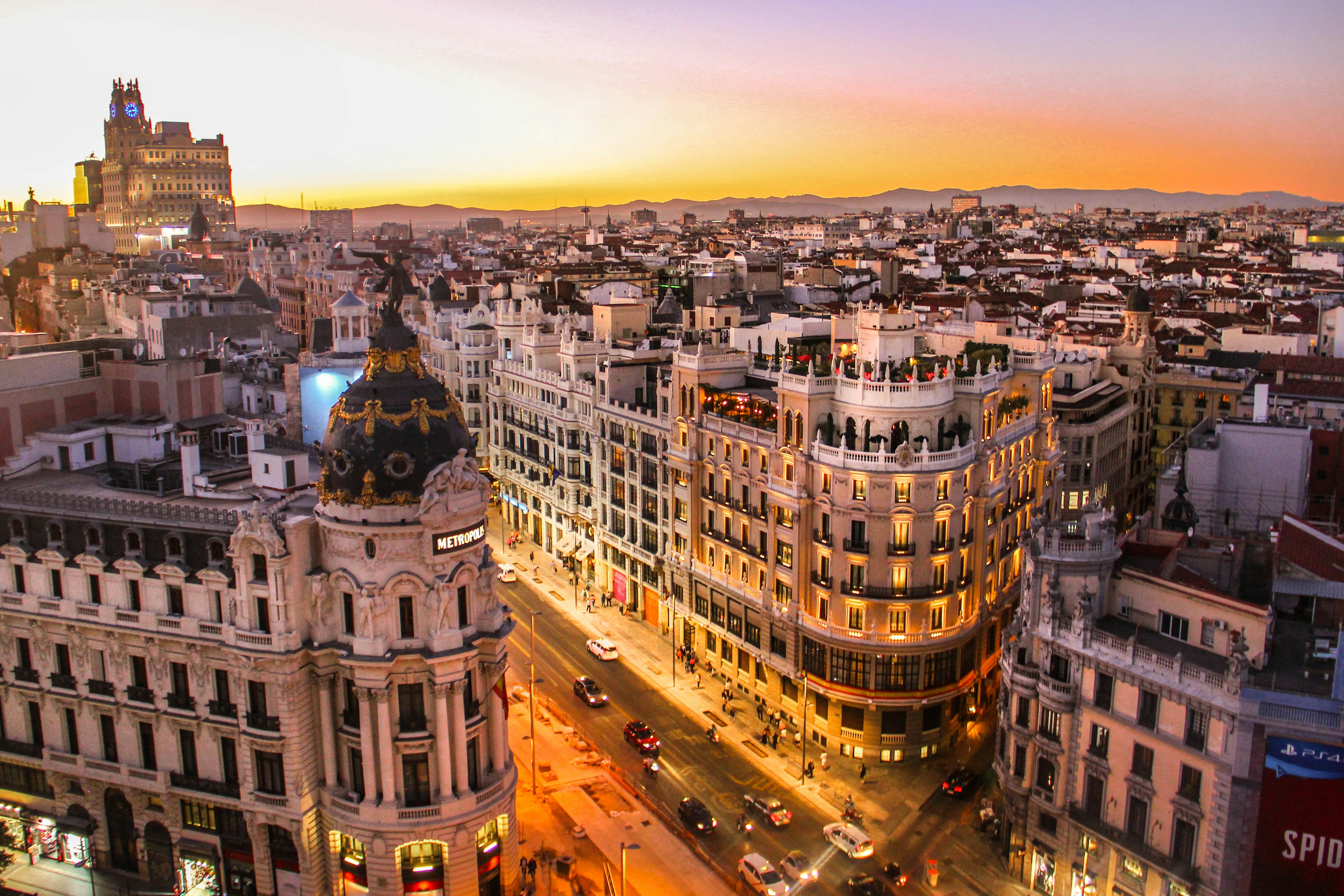
Madrid — 2.5 h by AVE high-speed train
The smart structure
Before anything else, book your flights open-jaw: into Barcelona, home from Madrid (or reverse). It usually costs about the same as a round-trip and saves a wasted day backtracking. This plan does Barcelona first (5 nights), trains to Madrid (4 nights), and flies home from Madrid — but it reverses cleanly if your flights are cheaper that way. Pre-book Barcelona's two timed-entry sights (Sagrada Família and Park Güell) before you fly; everything else can wait.
Barcelona: Days 1–5
Five nights gives you the city plus a day trip without rushing:
Day 1 — Arrive, ease in.Gothic Quarter orientation walk, early tapas, fight the jet lag by staying up to a local bedtime.
Day 2 — Sagrada Família + the old city. Morning basilica slot, Hospital de Sant Pau, then the Gothic Quarter and El Born at dusk.
Day 3 — Park Güell + Modernisme. Morning at Park Güell, Gràcia for lunch, one Gaudí house on Passeig de Gràcia, Poble-sec tapas in the evening.
Day 4 — Day trip. Montserrat (mountain monastery) is the classic; Girona (medieval city, 38 min by train) the easy alternative.
Day 5 — Markets, Montjuïc, the sea. A market morning and the Palau de la Música, Montjuïc by cable car, and a Barceloneta seafood dinner to close out Barcelona.
The train between them: Days 5–6
On the morning of Day 6, take the high-speed train from Barcelona Sants to Madrid Atocha — about 2h30 city-center to city-center. Four operators run this line (Renfe AVE, Avlo, Ouigo, iryo), so book ahead for the best fare, which can be remarkably cheap on the low-cost services. The train beats flying once you count airport transfers and security, and it's far more pleasant — you're working downtown to downtown with luggage racks and legroom. Arrive in Madrid by midday with the afternoon ahead.
Madrid: Days 6–10
Madrid is grander, more Spanish-feeling, and built around world-class art and big-city energy:
Day 6 — Arrive, settle in. Drop bags, explore the centro — Puerta del Sol, Plaza Mayor — and an evening of tapas in La Latina or near Santa Ana.
Day 7 — The art. The Prado in the morning (one of the world's great museums), the Retiro park in the afternoon, and the Reina Sofía for Picasso's Guernica if you have the appetite.
Day 8 — Toledo day trip, or Royal Madrid. Either take the short high-speed hop to Toledo (about 35 minutes), a stunning medieval hill city, for a full day — or, if you'd rather stay put, spend the day at the Royal Palace and the surrounding old quarter. Toledo is a full day, so it's one or the other, not both.
Day 9 — Neighborhoods + flamenco. Explore Malasaña or Chueca, the markets, the Thyssen museum, and catch a flamenco show in the evening — Madrid does flamenco with real depth.
Day 10 — Fly home from Madrid (MAD).
Barcelona vs Madrid: what to expect
They're genuinely different trips. Barcelona is coastal, Catalan, defined by Gaudí and Modernisme, walkable and beach-fringed, with a distinct regional identity. Madrid is the high, landlocked capital — grander boulevards, the country's best art museums, later nights, and a more classically Spanish feel. Most first-timers find Barcelona more immediately charming and Madrid a grower; doing both gives you the fuller picture of Spain that either alone misses.
Ways to adjust the ten days
This plan is a frame, not a rule. A few common variations: add Seville or the south by trimming a day from each city and taking the high-speed train onward from Madrid — though that starts to push ten days thin across three stops. Go deeper on art by giving Madrid a fifth night and Barcelona four, if museums are your priority over Gaudí. More beach by swapping Barcelona's Day 4 trip for a Costa Brava or Sitges beach day. Slower pace by dropping one of the two day trips entirely and simply living in the cities — there's no obligation to leave town twice. And if you're traveling with kids, lighten the museum load in Madrid with the Retiro park's boats, the cable car, and an earlier dinner rhythm. The two anchors that shouldn't change: open-jaw flights and the train (not a plane) between the cities.
Practical notes for the two-city trip
Open-jaw flights are the single best routing move — never fly round-trip into one city and backtrack.
Book the AVE/Avlo/Ouigo/iryo train early for cheap fares; bring ID for boarding and arrive ~20–30 minutes ahead for the luggage scan.
Don't fly between them — the train is faster door-to-door and far nicer.
Pack one bag you can wheel onto a train; you'll move cities once mid-trip.
Each city has its own transit card — don't expect Barcelona's T-casual to work in Madrid.
The 90/180 Schengen rule covers your whole Spain stay; ten days is well within it.
FAQ
Is 10 days enough for Barcelona and Madrid?
Yes — it's a comfortable split, roughly five nights in each with a day trip from both. It gives each city room to breathe without rushing, plus the high-speed train day between them.
Should I fly or take the train between Barcelona and Madrid?
Take the train — about 2h30 city-center to city-center on the high-speed line, faster than flying once you count airport time, and far more comfortable. Four operators compete on the route, so fares can be cheap booked ahead.
Which city should I visit first?
Either works — book whichever open-jaw flight is cheaper. This plan does Barcelona first then Madrid, flying home from Madrid, but it reverses cleanly.
What's the difference between Barcelona and Madrid?
Barcelona is coastal, Catalan, and defined by Gaudí, walkable with beaches; Madrid is the grander landlocked capital with the country's best art museums and later nightlife. They're different enough that doing both is worthwhile.
What's the best day trip from each?
From Barcelona, Montserrat or Girona; from Madrid, Toledo (about 35 minutes by high-speed train) is the standout. Each adds a medieval counterpoint to the big city.