Your first day in Barcelona sets the tone for the whole trip — and after an overnight flight from the US, it's easy to get it wrong: crash too early, eat at the wrong times, try to cram in too much, and stumble into tourist traps. The good news is that a smart, low-key first day beats jet lag, eases you onto the local clock, and leaves you fresh for the big sights. This guide is your arrival-day game plan: how to handle jet lag, the meal-time adjustment, and what to actually do.
The jet lag reality
Barcelona is 6 hours ahead of US Eastern time (9 ahead of Pacific), and most flights from the US land in the morning after an overnight red-eye. You'll arrive tired, having half-slept on the plane, with your body thinking it's the middle of the night. The single most important rule: don't go to sleep when you arrive. A long afternoon nap is the classic jet-lag trap that wrecks your first days. Instead, push through to a local-time bedtime — get light, stay gently active, and reset your clock fast.
The arrival-day game plan
Get to your hotel and drop bags. If your room isn't ready (common for morning arrivals), leave your luggage and head out — don't sit in the lobby fighting sleep.
Get outside into daylight. Sunlight is the best jet-lag cure; it resets your body clock. A gentle walk in the morning light does more than any amount of coffee.
Keep it light and walkable. Don't book a major timed-ticket sight (like the Sagrada Família) for arrival morning — you'll be foggy and might miss it. Save the big stuff for day two.
Eat on the local clock (more below) — a proper lunch at the right time helps reset you.
Caffeine strategically — a coffee or two in the morning/early afternoon, but not late, so you can sleep at night.
Push to ~10–11pm before bed — match the local schedule and you'll wake up roughly adjusted.
What to do on a gentle first day
The ideal first day is orientation, not achievement — wander, get your bearings, and soak in the city without a demanding itinerary:
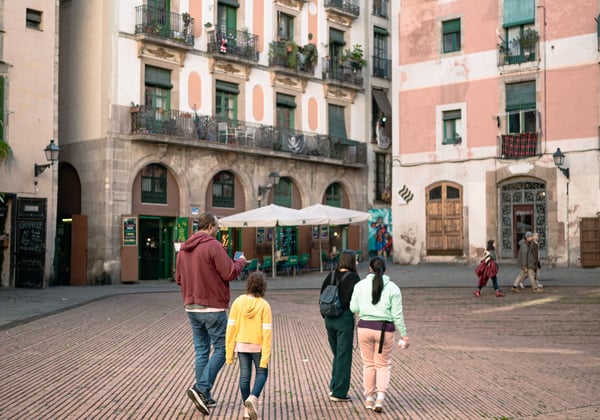
Stroll a walkable neighborhood — the Gothic Quarter, El Born, or the Eixample. Getting pleasantly lost is the perfect low-stakes first activity.
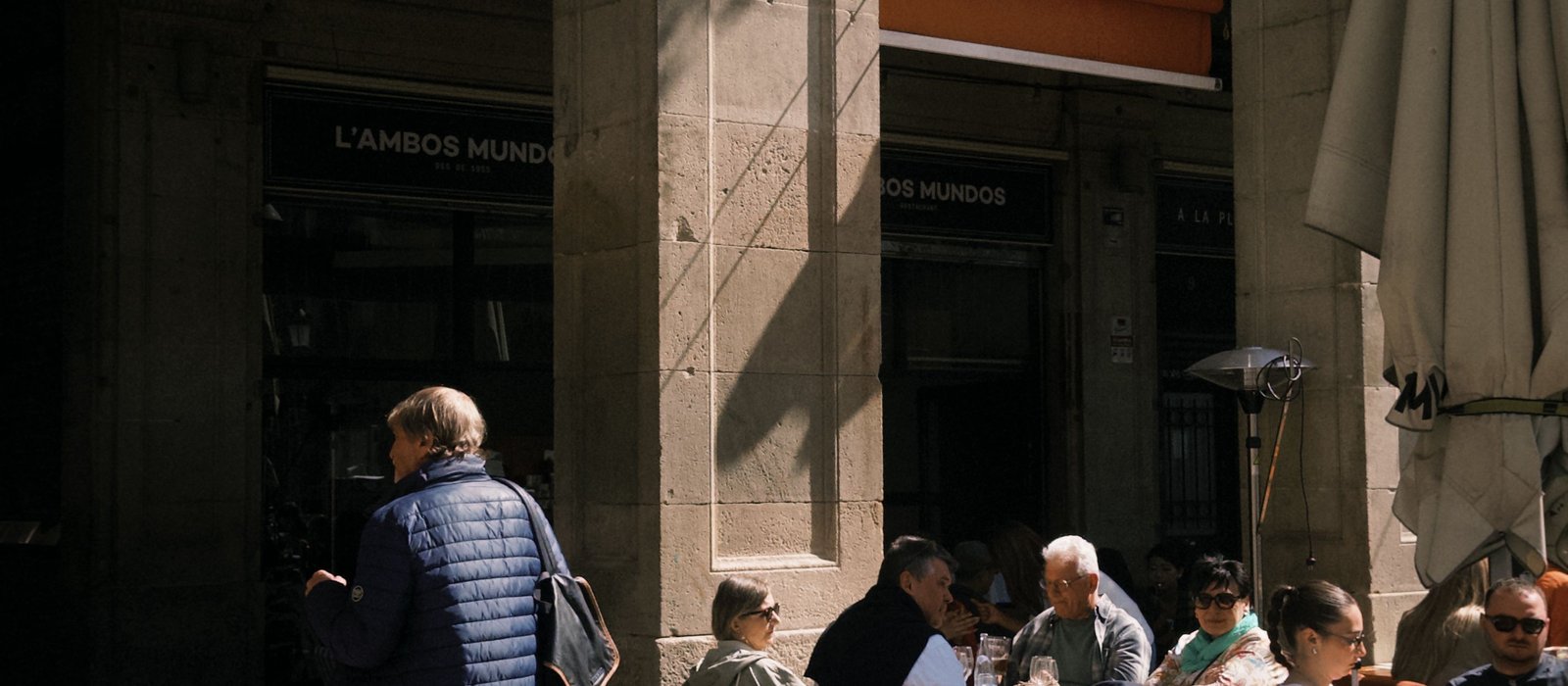
Sit at a café or terrace — ease into the rhythm with a coffee and some people-watching.
Have a proper lunch at local time (the menú del día is ideal).
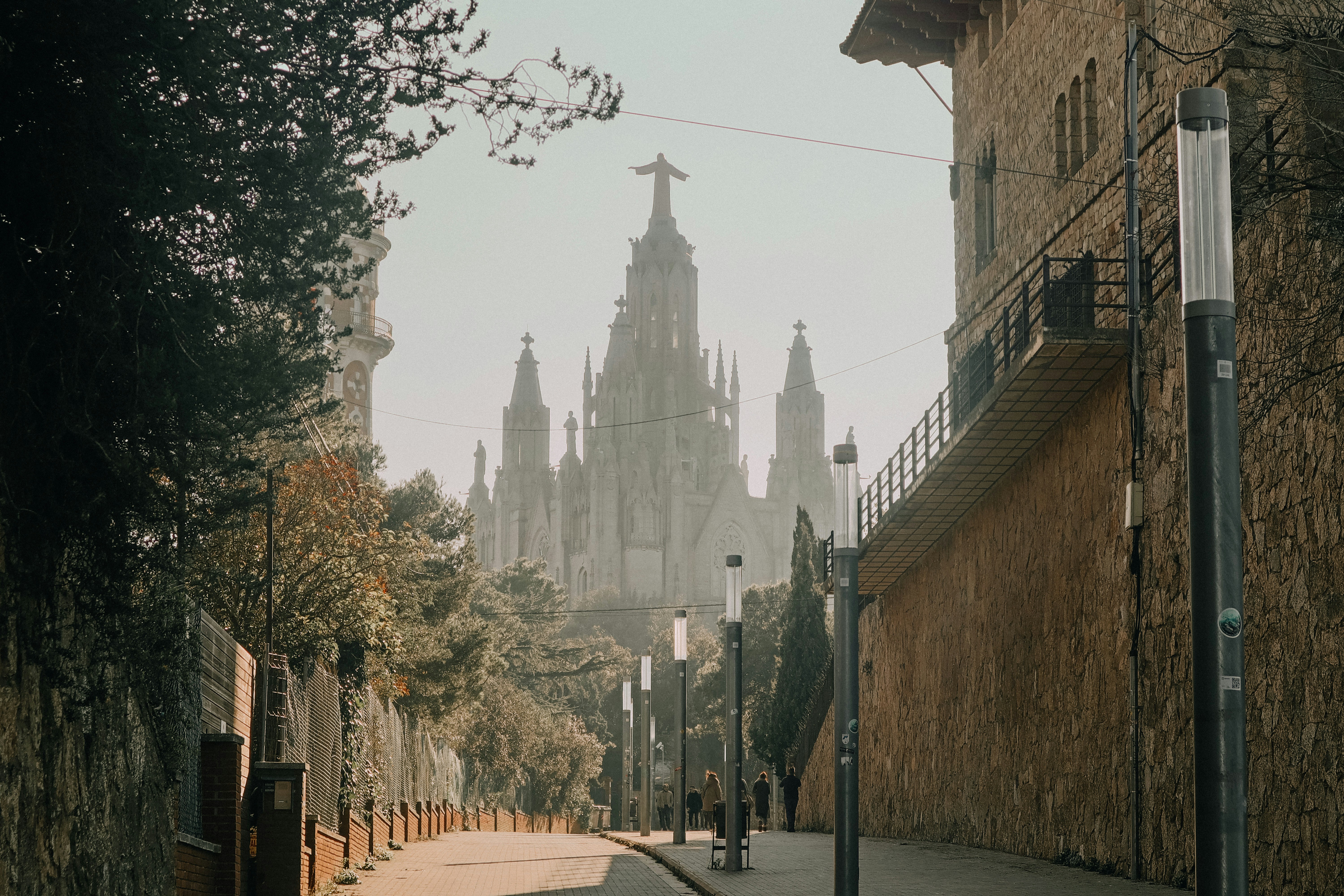
See a free, outdoor highlight — admire the Sagrada Família or a Gaudí house from the outside, walk to the seafront, or catch the sunset from a viewpoint.
Do an early-trip orientation walk or food tour if you have energy — it pays off all week by teaching you the lay of the land.
Keep dinner light and not-too-late on night one — a tapas crawl is perfect, then sleep.
The meal-time adjustment (start now)
Your first day is when the Spanish meal clock hits, so start adjusting immediately (see our meal-times guide for the full rundown). The essentials:
Breakfast is light — coffee and a pastry or pa amb tomàquet; don't expect a big American breakfast.
Lunch is the big meal, ~1:30–3:30pm — and a leisurely lunch is great for jet lag. Don't try to eat lunch at noon.
Dinner is late, ~8:30–10:30pm — kitchens often don't open before 8. On a jet-lagged first night, an earlier-end tapas dinner is fine, but don't expect restaurants at 6.
Bridge the gaps with an afternoon snack or vermut so you're not starving by the late dinner.
Siesta and other myths to drop
A few American preconceptions to leave at the airport:
The "siesta" myth. Big-city Barcelona does not shut down for an afternoon nap — life runs all day. You'll notice some small shops close midday (~2–5pm) and restaurant kitchens close between services, but the city isn't asleep. Don't plan your day around a siesta that mostly doesn't happen here.
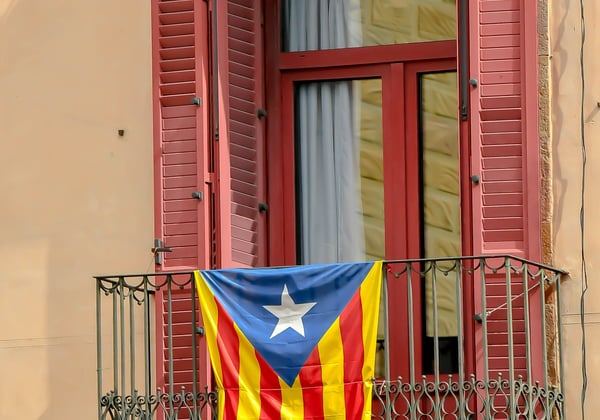
"Everyone speaks Spanish (only)." Barcelona is bilingual — Catalan and Spanish — and Catalan identity matters here. English is widely understood in tourist contexts; a few words of either local language are appreciated (see our language guide).
"I can wing the big sights." The headline attractions (Sagrada Família, Park Güell) need timed tickets booked ahead, especially in 2026 — don't expect to walk up on day two without a reservation.
"Dinner at six." Covered above — it just doesn't happen; adjust or eat among tourists.
Practical first-day tips
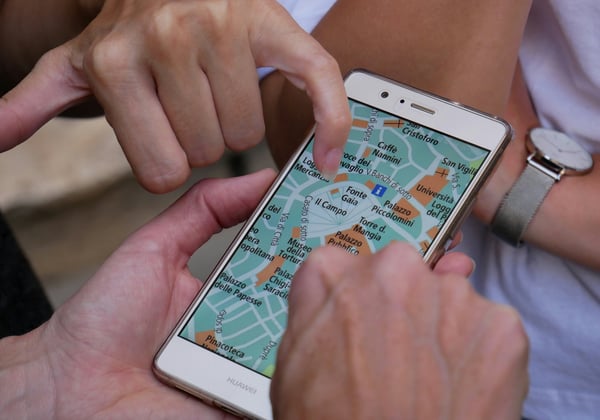
Set up your phone data first — activate your eSIM on landing so you have maps and ride apps immediately (see our eSIM guide).
Get to the city smartly from the airport — Aerobús, train, or taxi (see our airport guide); have your route planned before you land tired.
Hit an ATM or have a no-fee card — for a little cash, though cards work nearly everywhere.
Stay alert against pickpockets even tired — arrival day, jet-lagged and distracted, is exactly when bags go missing.
Hydrate and go easy — dehydration worsens jet lag; water over too much alcohol on night one.
Don't over-plan day one — a gentle, flexible arrival day that resets your clock beats an ambitious one you're too foggy to enjoy.
The bottom line
Treat your first day as a soft landing: get into daylight, stay awake until a local bedtime, eat on the Spanish clock, and wander a neighborhood without a demanding agenda. Save the timed-ticket headline sights for day two when you're sharper. Do that, and you'll beat the jet lag fast, ease onto the local rhythm, and have your whole trip ahead of you — alert, oriented, and ready for the Barcelona you came for.
FAQ
How do I beat jet lag on my first day in Barcelona?
Don't sleep when you arrive — push through to a local-time bedtime (~10–11pm). Get outside into daylight (the best clock-reset), stay gently active, use caffeine early not late, hydrate, and eat on the local schedule. Avoid the afternoon-nap trap.
What should I do on my first day in Barcelona?
Keep it light and orientation-focused — stroll a walkable neighborhood (Gothic Quarter, El Born, Eixample), sit at a café, have a proper local-time lunch, see a free outdoor highlight, and do a tapas dinner. Save timed-ticket sights like the Sagrada Família for day two.
Should I book sights for my arrival day?
No — you'll be jet-lagged and foggy, and might miss a timed slot. Save the Sagrada Família, Park Güell, and other big ticketed sights for day two when you're sharper, and keep arrival day flexible and gentle.
Is the siesta real in Barcelona?
Largely a myth in big-city Barcelona — life runs all day. You'll notice some small shops close midday (~2–5pm) and restaurant kitchens close between lunch and dinner service, but the city doesn't shut down for a nap. Don't plan your day around one.
What time should I eat on my first day?
Start on the local clock: light breakfast, big leisurely lunch at 1:30–3:30pm (great for jet lag), and a late dinner (8:30–10:30pm, though an earlier tapas dinner is fine when jet-lagged). Bridge the gap with an afternoon snack or vermut.
Keep planning
Not sure how the slots fit together?
Pick your trip length and we'll route a real day-by-day plan around the timed entries.