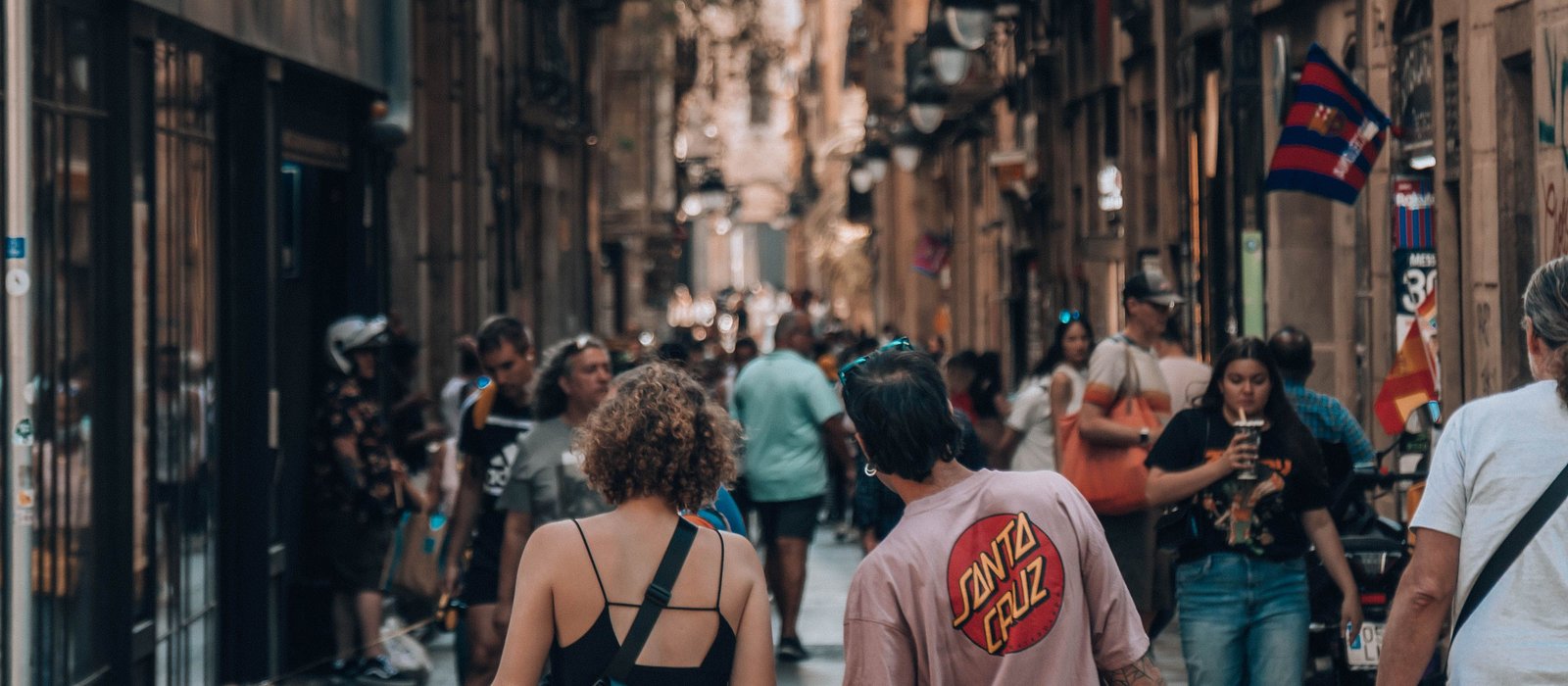
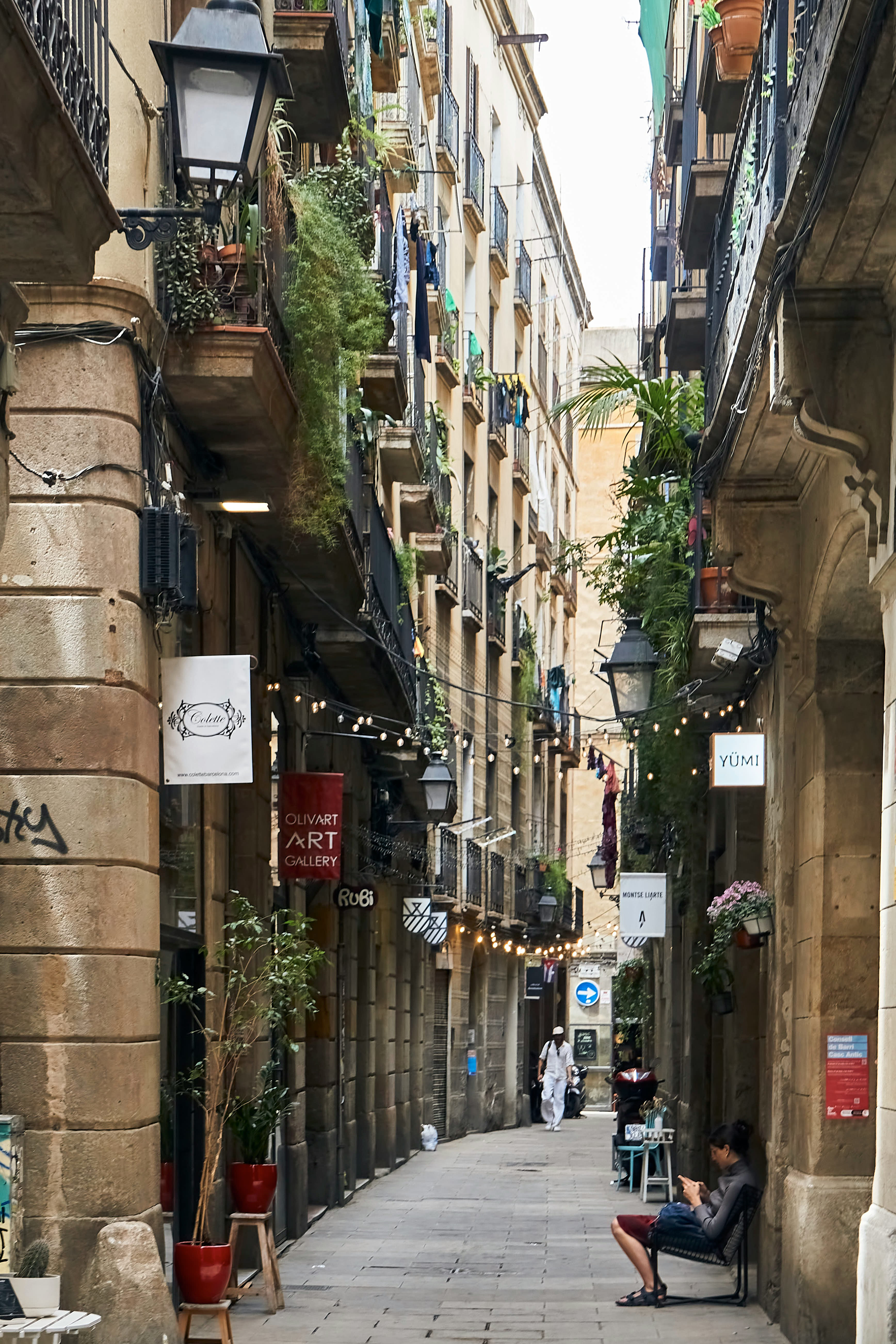
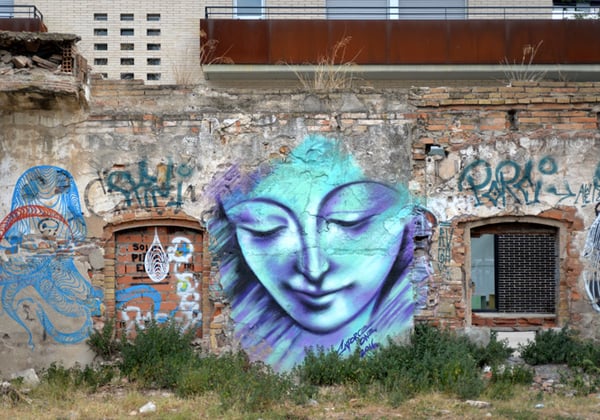
El Raval is Barcelona's most misunderstood neighborhood — edgy, multicultural, creative, and the subject of more hand-wringing than any other central barrio. The honest version: it's a fascinating, vibrant, genuinely diverse quarter with some of the city's best cheap eats, contemporary art, and nightlife, alongside some grittier, sketchier corners you should know about. For travelers who want real city texture rather than a polished tourist set, El Raval rewards a visit — done with the right awareness. Here's the guide.
El Raval, oriented
MACBA — Contemporary art in El Raval
La Boqueria — Market off La Rambla — go early, not at lunch
Palau Güell — Off La Rambla, in El Raval
El Raval — Multicultural, MACBA, edgy & central
Where El Raval is
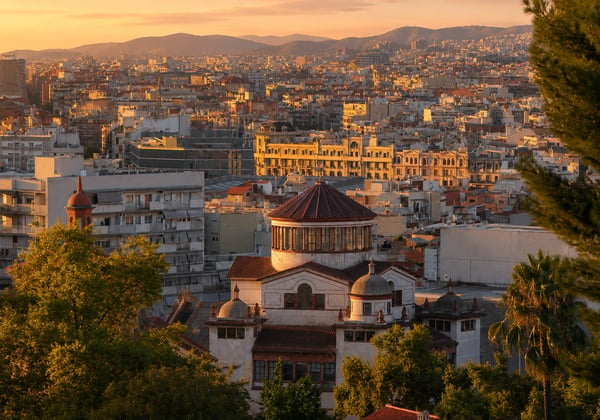
El Raval is the western half of Ciutat Vella, on the other side of Las Ramblas from the Gothic Quarter — bounded by Las Ramblas, the waterfront, and the ring of avenues around the old city. It was historically the rough, working-class district outside the medieval walls (the old "Barrio Chino"), and it's been transformed over recent decades by a major urban-renewal push and a wave of immigration that made it Barcelona's most multicultural neighborhood. Metro stops Liceu (L3), Sant Antoni (L2), and Paral·lel ring it; it's walkable from the center, just across Las Ramblas.
What to see and do
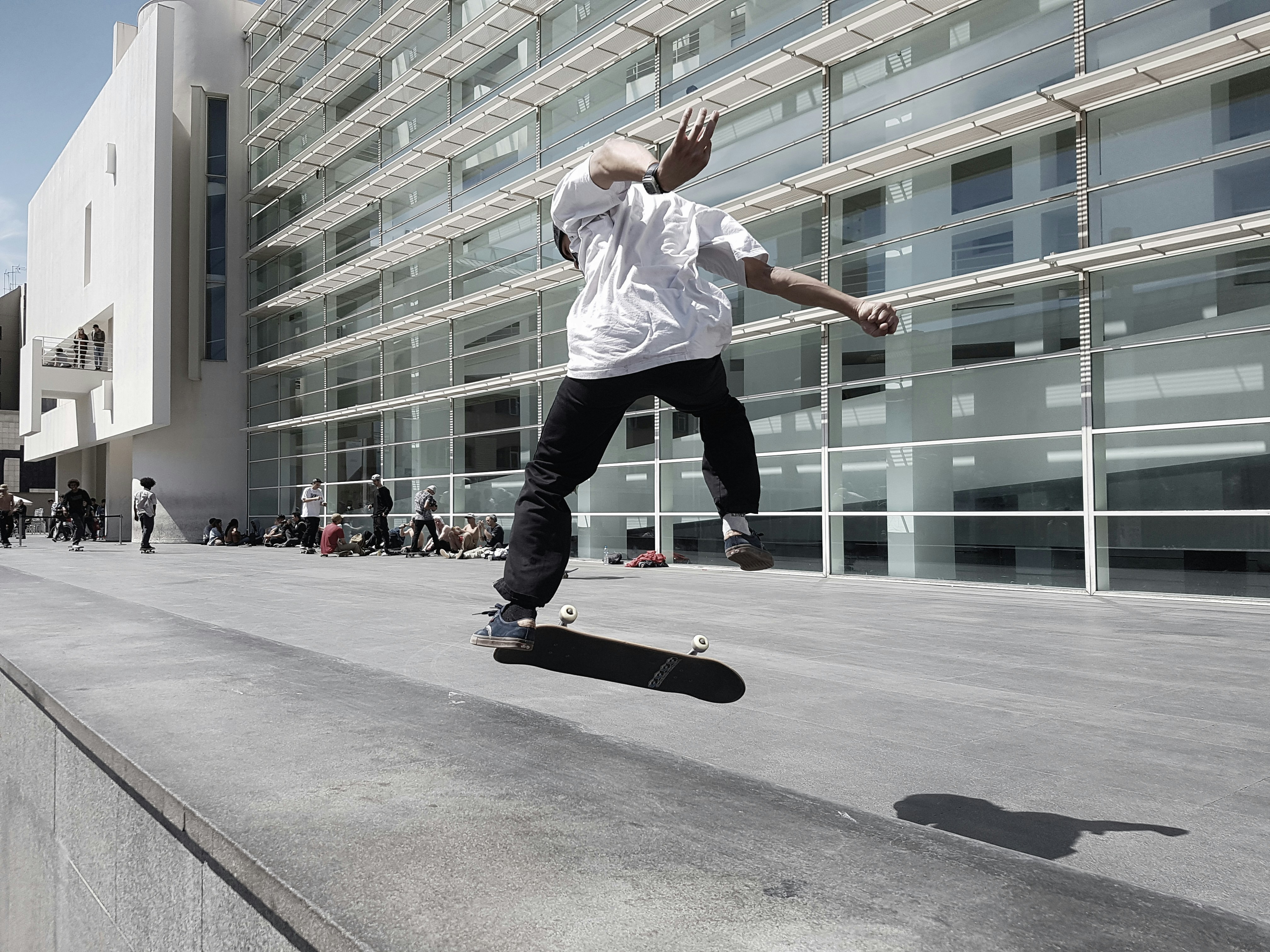
MACBA (Barcelona Museum of Contemporary Art). The gleaming white Richard Meier building is the neighborhood's icon — and its plaza is the city's most famous skateboarding spot, a scene in itself.
CCCB. The Centre for Contemporary Culture, next to MACBA, with excellent rotating exhibitions — together they anchor El Raval's creative reputation.
Rambla del Raval. The neighborhood's own palm-lined boulevard, more local and less touristy than the famous Ramblas, with Fernando Botero's plump bronze cat sculpture as its mascot.
Gran Teatre del Liceu. Barcelona's grand opera house sits on the Raval edge of Las Ramblas — tours available.
Palau Güell. An early Gaudí mansion (a UNESCO site) just off Las Ramblas on the Raval side, less crowded than his later work.
Sant Pau del Camp. A tiny, ancient Romanesque monastery — one of the oldest churches in Barcelona, an unexpected medieval pocket.
El Raval's real strength: food and diversity
This is one of Barcelona's best and most affordable eating neighborhoods, precisely because of its diversity. Alongside traditional Catalan taverns and historic bars, you'll find genuine Pakistani, Indian, Filipino, Middle Eastern, and North African food — some of the best-value, most authentic international eating in the city. It's also home to atmospheric old-school bars and bohemian spots, plus a thriving alternative nightlife scene. For travelers tired of the same tourist-tapas circuit, El Raval is a delicious change of pace and a reminder that Barcelona is a real, multicultural metropolis.
The honest safety picture
El Raval's reputation needs straight talk. The northern half (around MACBA, CCCB, Sant Antoni) is creative, lively, and perfectly comfortable. The southern part toward the port can be grittier — more visible drug activity, sex work in some streets, and a rougher late-night feel in pockets. None of this makes it a no-go zone — plenty of people live, eat, and stay here happily — but it warrants more awareness than the polished neighborhoods:
By day it's fine to explore; the museums-and-food northern half is genuinely pleasant.
At night, stick to the busier, well-lit streets and the lively bar areas; be more cautious on quiet streets in the southern Raval late.
Pickpocketing and bag-snatching are the main practical risks, as in all central Barcelona — usual precautions apply.
Use normal city smarts — and you'll likely have a great time.
Who El Raval suits
El Raval is for curious, streetwise travelers who want authenticity, diversity, and value over polish — those drawn to contemporary art, international food, and a real urban neighborhood with edge. It's increasingly popular for budget stays (some of the cheapest central beds are here), which suits backpackers and the adventurous, less so families or the anxious. If you stay, choose the calmer northern half and a well-reviewed place on a busier street. (Our where-to-stay and budget-stays guides put it in context.)
A neighborhood in transformation
El Raval is worth understanding as a place actively reinventing itself, because that tension is what gives it character. For much of the 20th century this was the "Barrio Chino," a dense, poor, red-light district with a reputation for vice that the rest of the city looked down on. Beginning in the 1990s and accelerating around the 2004 Forum, the city poured investment into the area: it bulldozed slum blocks to carve out the Rambla del Raval, planted MACBA and the CCCB as cultural anchors, and deliberately tried to "clean up" and gentrify the barrio. The results are genuinely mixed and visible on a single walk — gleaming museums and hip galleries a block from struggling streets, artisan coffee next to decades-old immigrant grocers, rising rents pressing against a long-rooted working-class and immigrant community. That friction is exactly why El Raval feels more alive and real than the polished tourist districts: it's a neighborhood with actual stakes, not a stage set. Visiting thoughtfully — supporting the independent and immigrant-run businesses, treating residents' home as a home rather than a spectacle — is part of engaging with it honestly.
How to experience it
Give El Raval a half-day, ideally combining the cultural and the culinary: MACBA and CCCB, a wander down the Rambla del Raval past the Botero cat, Palau Güell or Sant Pau del Camp, and — the highlight — a meal at one of its international or old-school spots. It pairs naturally with a Las Ramblas/Boqueria walk just across the boulevard. Go in daylight for your first visit, keep your wits about you, and you'll find one of the most alive, genuinely diverse corners of the city — the antidote to tourist Barcelona.
FAQ
What is El Raval known for?
Barcelona's most multicultural neighborhood — contemporary art (MACBA, CCCB), excellent affordable international food, the Rambla del Raval with its Botero cat, edgy bohemian nightlife, and a gritty, creative, real-city energy distinct from the polished tourist areas.
Is El Raval safe for tourists?
The northern half (around MACBA and Sant Antoni) is creative and comfortable; the southern part toward the port is grittier, especially at night. By day it's fine to explore; at night stick to busy, well-lit streets, and take the usual pickpocket precautions.
Is El Raval worth visiting?
Yes, for travelers who want authenticity and diversity over polish — great contemporary art, some of the city's best-value international food, and a genuinely multicultural neighborhood. Visit in daylight first and combine culture with a meal.
Where should I eat in El Raval?
It's one of the city's best and most affordable eating areas, with authentic Pakistani, Indian, Filipino, Middle Eastern, and North African food alongside traditional Catalan taverns and atmospheric old bars — a refreshing change from the tourist-tapas circuit.
Should I stay in El Raval?
It's popular for budget and adventurous travelers — some of the cheapest central beds are here — but choose the calmer northern half and a well-reviewed place on a busy street. It suits the streetwise more than families or nervous first-timers.