The single best value in Spanish dining isn't a secret restaurant or a happy hour — it's the menú del día, the weekday lunch deal that lets you eat a full, multi-course meal for a fraction of dinner prices. It's a beloved local institution most tourists walk right past, and understanding it transforms both your budget and your sense of how Barcelona actually eats. This guide explains what it is, how it works, and how to find a good one.
What the menú del día is
The menú del día ("menu of the day") is a fixed-price, multi-course lunch served on weekdays, a tradition rooted in feeding workers a proper midday meal. For one set price you typically get:
A first course (primer) — salad, soup, pasta, vegetables, or a rice dish; usually a choice of several.
A second course (segon) — meat or fish with a side; again, a choice.
Dessert or coffee (postres o cafè) — and often you can have both.
A drink included — frequently water, a soft drink, or even a glass of wine or beer, built into the price.
Bread, included.
It's a genuine three-course meal with a drink, for a price that often undercuts a single à la carte main — the best-value way to eat well in the city.
What it costs and when
The menú del día is a weekday lunchtime offering — Monday to Friday, served during the Spanish lunch window (roughly 1–4pm). Prices vary by neighborhood and quality, but it's consistently excellent value: modest local spots offer it cheaply, while smarter restaurants offer more ambitious versions for a bit more — yet still far below what the same food costs à la carte or at dinner. Weekends usually don't have it (or offer a pricier "menú" instead), which is the main catch: this is a weekday-lunch play. Plan your big, sit-down meal for a weekday midday to take advantage.
How to find a good one
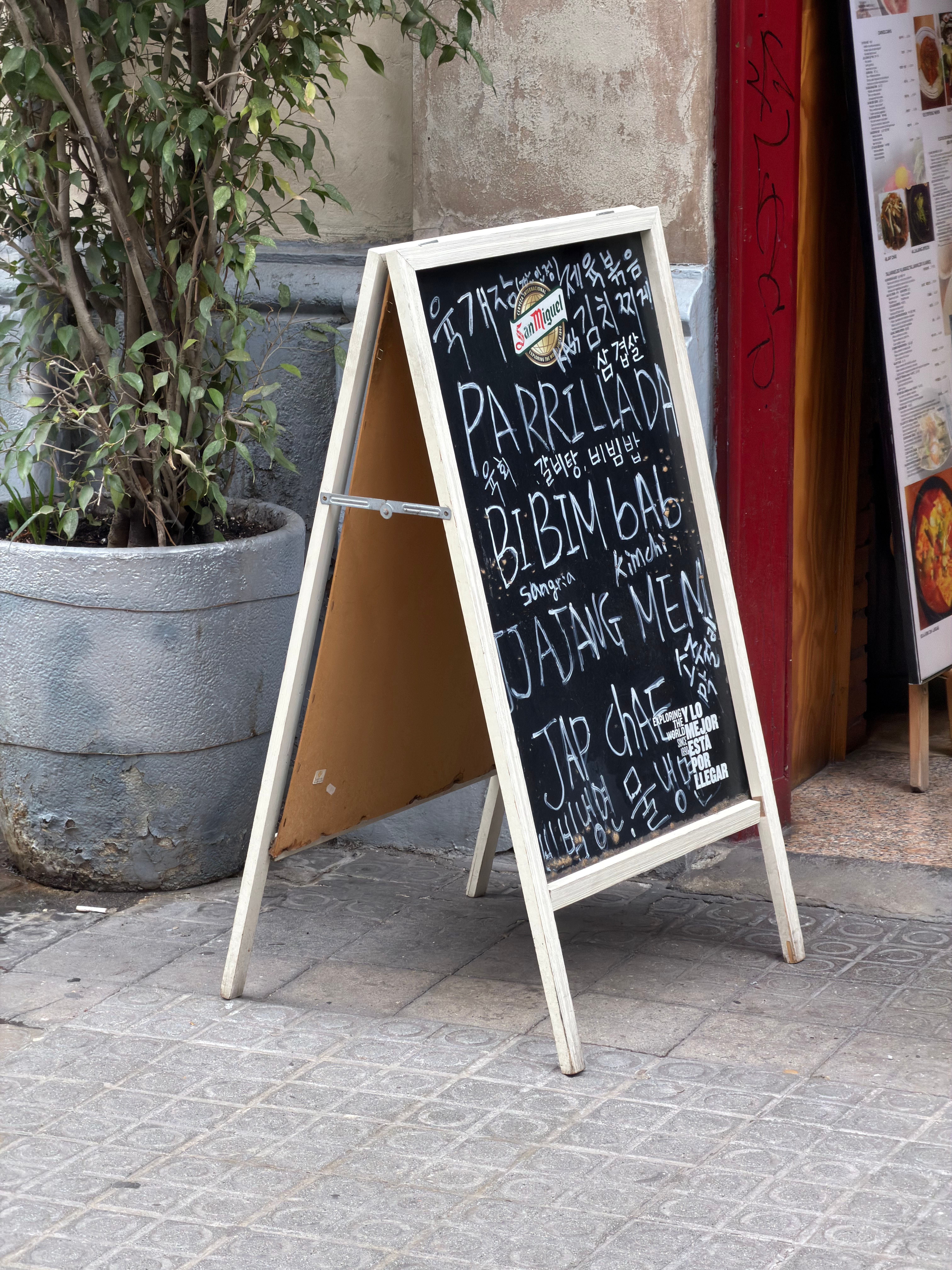
Look for the chalkboard. Restaurants advertise the day's menú on a board or sign outside, usually listing the primer and segon choices and the price. If you see one, that's your cue.
Follow the workers. A place full of local office workers and tradespeople at 2pm is serving a good, honest menú del día — that lunchtime crowd is the quality signal.
Go where locals are, off the tourist drag. Neighborhoods like the Eixample Esquerra, Sant Antoni, Poble-sec, and Gràcia have excellent menús; tourist-zone versions are weaker and pricier.
Check it's the day's menú, not a fixed "tourist menu" — the real thing changes daily based on what's fresh, and is written in Catalan/Spanish.
Arrive within the lunch window — show up at 1:30–2:30pm; too early and it's not serving, too late and it's done.
How to order and eat it
You'll choose one primer and one segon from the day's options, plus dessert or coffee.
The drink is usually included — you can often have a glass of wine or a caña at no extra cost, which is part of the charm.
Don't rush — this is the leisurely Spanish lunch; take your time, it's the main meal of the day here.
Bread and the included drink come with it; extras beyond the menú (a second glass, a specialty coffee) may cost more.
It's filling — a three-course lunch means you'll want only light tapas in the evening, which is exactly the local rhythm.
Where the tradition comes from
The menú del día has a history worth knowing, because it explains why it's such reliable value. It dates from the Franco era, when in 1965 the government actually mandated that restaurants offer an affordable fixed-price "menú turístico" to feed workers and keep eating out accessible. The formal legal requirement faded decades ago, but the custom stuck so thoroughly that it became a permanent fixture of Spanish life — a daily, affordable, proper meal that working people across the country count on. That heritage is why even today the menú del día is genuinely good value rather than a tourist gimmick: it evolved to feed locals on a budget, and the places that do it best still cook it for the regulars who eat there every working day, not for visitors. When you sit down to one, you're participating in a deeply embedded national habit — which is also why following the local lunch crowd to a busy spot is such a reliable way to find a good one. The tradition's working-class roots are precisely what guarantee the value endures.
Why it matters for your trip
The menú del día is more than a money-saver — it's a window into how Barcelona genuinely eats: a substantial midday meal, unhurried, with wine, at a fair price, in a room full of locals rather than tourists. Building your day around a weekday menú del día lunch (and lighter tapas at night) aligns you with the local rhythm, saves you serious money over dinner-focused eating, and consistently delivers some of the most satisfying, authentic meals of a trip. It's the single best piece of practical food advice for Barcelona: make lunch your main meal, and make it the menú del día.
FAQ
What is the menú del día?
A fixed-price, multi-course weekday lunch — typically a first course, a main, dessert or coffee, bread, and a drink included — at a fraction of à la carte or dinner prices. It's the best value in Spanish dining.
How much does a menú del día cost?
It varies by neighborhood and quality — modest local spots are very cheap, nicer restaurants a bit more — but it's always excellent value, usually undercutting the price of a single à la carte main for a full three courses with a drink.
When is the menú del día served?
Weekdays (Monday–Friday) during the Spanish lunch window, roughly 1–4pm. Weekends typically don't offer it, so plan your big sit-down meal for a weekday midday.
How do I find a good menú del día?
Look for the chalkboard outside listing the day's courses, follow the local lunch crowd (a place full of workers at 2pm is a good sign), and head to local neighborhoods like Sant Antoni, Poble-sec, or the Eixample Esquerra rather than the tourist zones.
Is the drink really included?
Usually yes — water, a soft drink, or even a glass of wine or beer is typically built into the fixed price, along with bread. It's part of what makes the menú del día such good value.