Tarragona is the day trip for history lovers — Catalonia's Roman capital, where a 2,000-year-old amphitheater sits dramatically above the Mediterranean and a UNESCO-listed circuit of ruins, walls, and an aqueduct threads through a relaxed seaside city. About an hour south of Barcelona by train, it offers ancient Rome with a beach-town ease, and far fewer crowds than the headline Catalan day trips. This guide covers getting there, what to see, and how to plan the day.
Barcelona → Tarragona by train
Barcelona Sants — Main long-distance train station
Tarragona — Roman ruins by the sea
Why Tarragona
Two thousand years ago, Tarragona (Roman Tarraco) was one of the most important cities in Roman Hispania — a provincial capital — and it wears that history openly. Its Roman monuments are collectively a UNESCO World Heritage Site, scattered through and around a walkable old town that also happens to sit on a lovely stretch of coast. The combination — major Roman ruins plus a relaxed Mediterranean city with beaches — is what sets Tarragona apart from the medieval (Girona) and beach (Sitges) day trips. It's the obvious choice if Roman history excites you, and a pleasant surprise even if you just want a low-key seaside city with substance.
Getting there
Regional train (simplest): Renfe regional from Barcelona Sants/Passeig de Gràcia to Tarragona station in about 1 hour to 1h20, arriving in the city center near the old town and coast — the most convenient option.
High-speed (fastest but awkward): AVE to Camp de Tarragona in ~35 minutes — but that station is well outside the city and needs an onward bus or taxi, often cancelling out the time saved. For a day trip, the regional train to the central station is usually the better choice.
Book high-speed ahead if you use it; regional you can buy day-of.
Your Barcelona transit card doesn't cover this out-of-zone trip — buy a separate ticket.
What to see
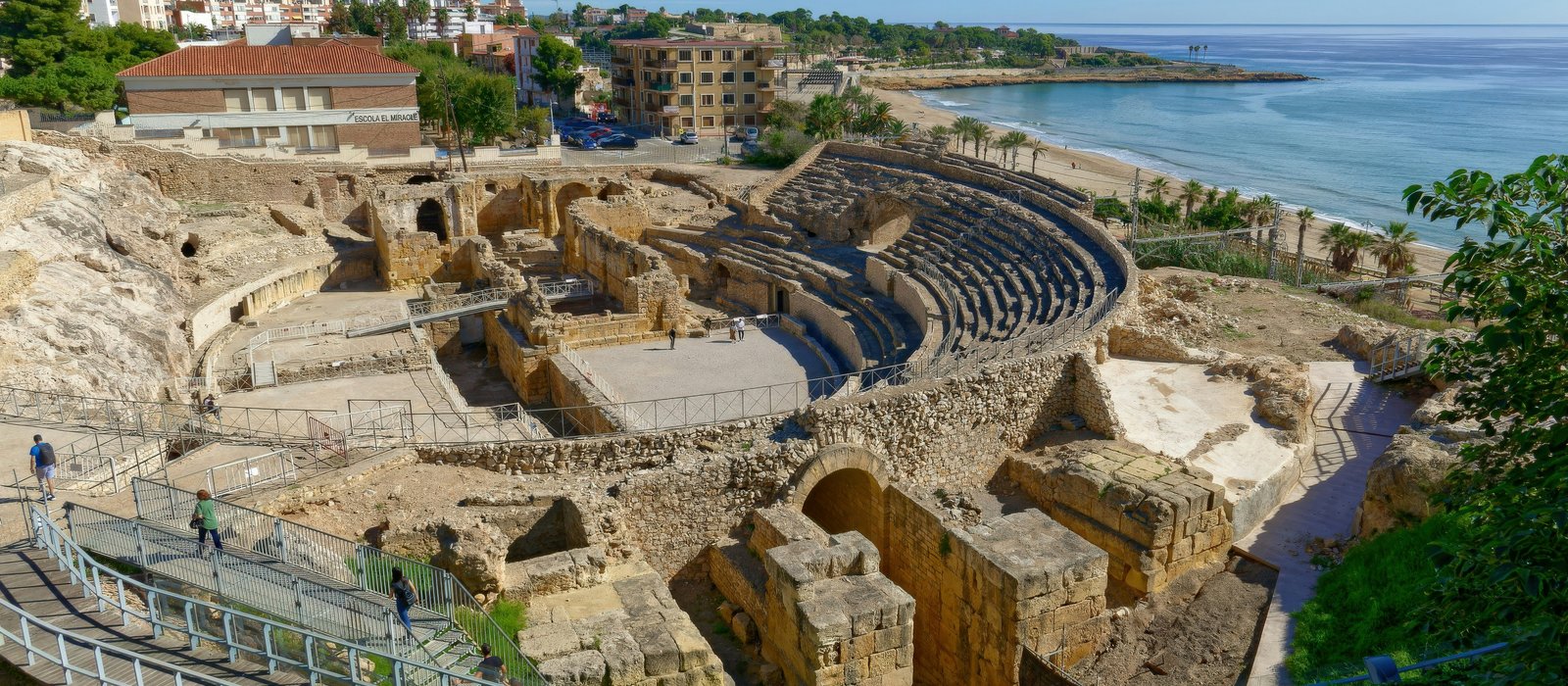
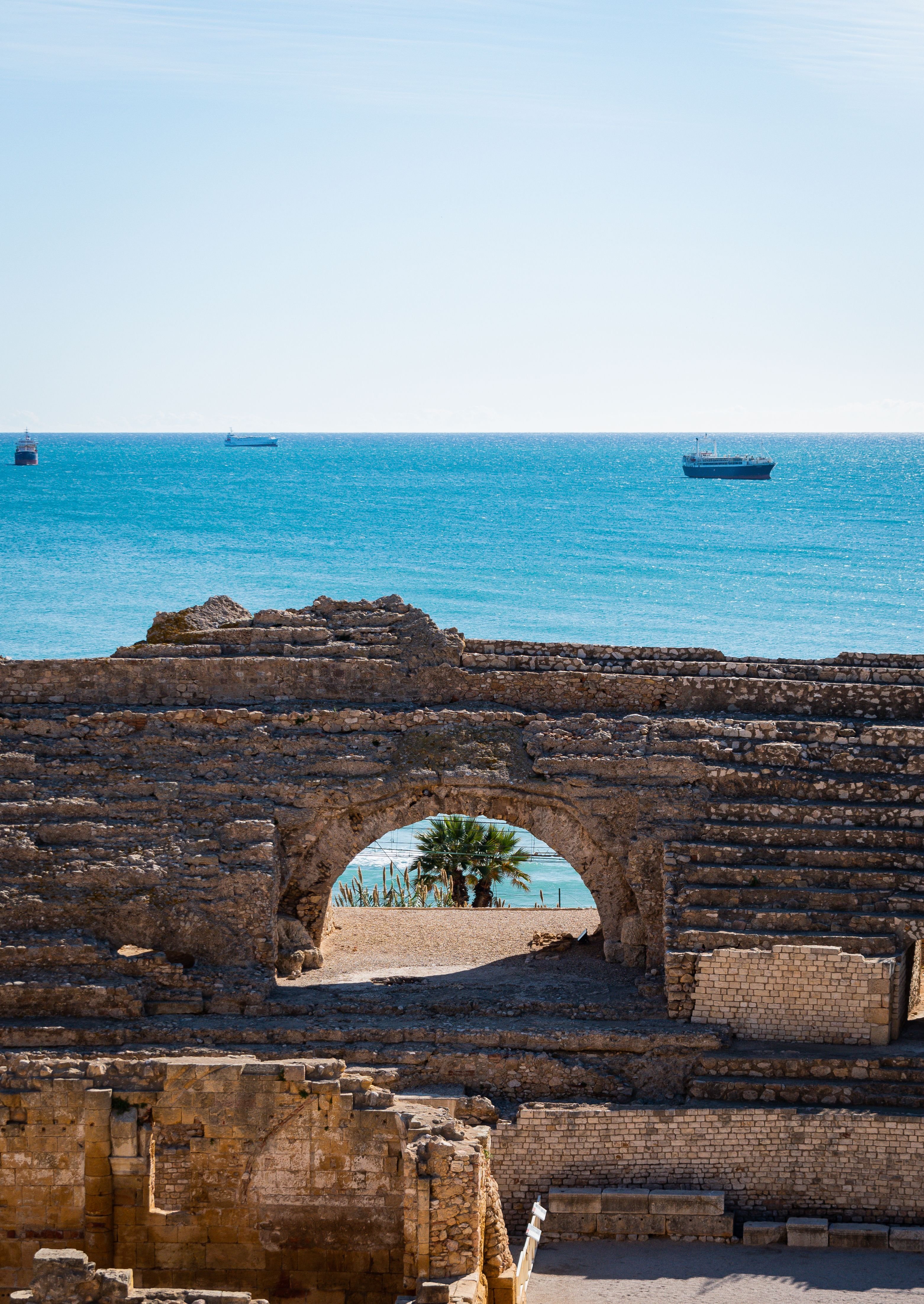
The Roman Amphitheater. The signature sight — a 2nd-century arena perched above the sea, where gladiators once fought against a backdrop of blue Mediterranean. One of the most beautifully sited Roman ruins anywhere.
The Roman Circus and Praetorium. A remarkably preserved chariot-racing circus running partly under the modern city, with a tower you can climb for views.
The Roman walls (Passeig Arqueològic). Walk the ancient fortifications on a scenic archaeological promenade.
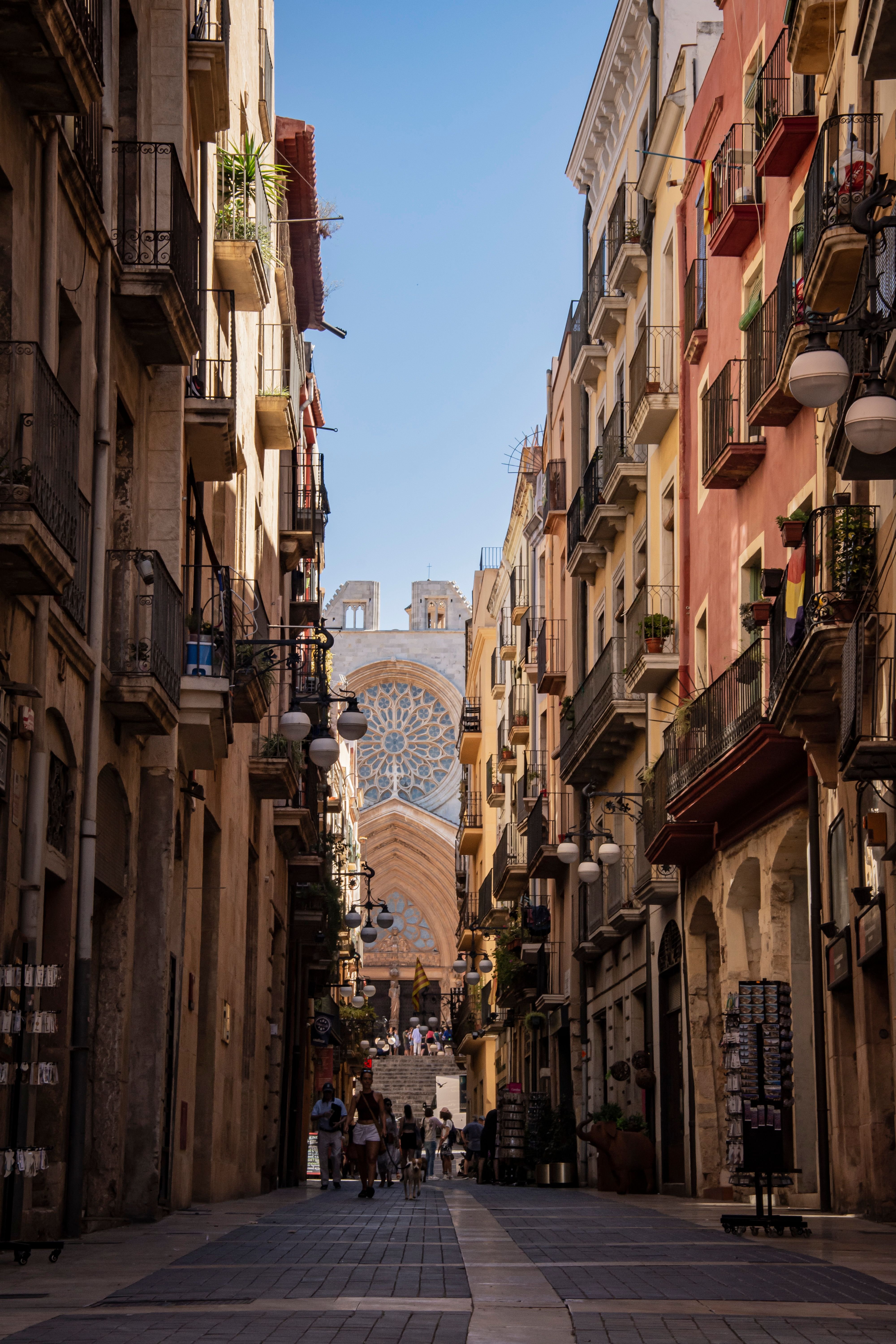
The Cathedral. A grand medieval cathedral built atop a Roman temple, crowning the old town.
The Roman Aqueduct (Pont del Diable). A spectacular, well-preserved aqueduct bridge just outside the city (a short bus or taxi ride) — genuinely impressive, and often included in the combined Roman-sites ticket (check current access).
The old town and Mediterranean Balcony. Atmospheric medieval lanes leading to the Balcó del Mediterrani, a clifftop terrace with sweeping sea views.
The beach. Tarragona has city beaches right below the old town — a swim and seafood lunch round out the Roman history nicely.
How to plan the day
Tarragona is compact and walkable, so a logical loop works well: from the central station, head up to the amphitheater and the Mediterranean Balcony for the iconic sea-and-ruins views, wind up through the old town to the cathedral, take in the circus and walls, and finish with lunch and a beach hour below. A combined ticket covers several of the Roman sites and is worth it if you're doing the full circuit. The aqueduct, being outside town, is an optional add-on if you have time and energy. A relaxed full day covers everything without rushing; a half-day hits the highlights.
A little Roman context
Understanding what you're looking at makes Tarragona far richer. As Tarraco, this was the oldest Roman settlement on the Iberian Peninsula and the capital of Hispania Tarraconensis, the largest Roman province in Hispania — effectively the Roman administrative heart of much of what's now Spain. The emperor Augustus himself wintered here during his campaigns. That imperial importance is why the city has such a concentration of monumental Roman building: the amphitheater for spectacles, the vast circus for chariot racing, the provincial forum, temples, and the walls and aqueduct that supported a major capital. The collected ruins were inscribed as a UNESCO World Heritage Site precisely because Tarraco illustrates, more completely than almost anywhere, how a Roman provincial capital was laid out and lived in. So as you walk from amphitheater to circus to forum, you're not just seeing scattered ruins — you're tracing the anatomy of a working Roman city, with the Mediterranean that made it prosperous always in view.
Practical tips
Take the regional train to the central station — the high-speed Camp de Tarragona station's awkward location usually isn't worth it for a day trip.
Buy a combined Roman-sites ticket if visiting several monuments — it saves money over individual entries.
Wear good shoes — it's a hilly old town with cobblestones and ruins.
Bring sun protection — the ruins and seafront are exposed; summer is hot.
Consider pairing with a beach hour — the city beaches are right there, a nice contrast to the ancient stones.
It's a quieter day trip — Tarragona sees fewer tourists than Girona or Montserrat, a bonus if you want substance without crowds.
FAQ
How do I get from Barcelona to Tarragona?
The simplest way is a Renfe regional train from Barcelona Sants to Tarragona's central station in about an hour, arriving near the old town and coast. The high-speed AVE is faster (~35 min) but stops at Camp de Tarragona outside the city, needing an onward bus or taxi.
Is Tarragona worth a day trip?
Yes, especially for history lovers — it's Catalonia's Roman capital, with a UNESCO circuit of ruins including a seaside amphitheater, plus a relaxed Mediterranean old town and beaches, and far fewer crowds than Girona or Montserrat.
What are the main Roman sites in Tarragona?
The seaside amphitheater, the Roman circus and Praetorium, the ancient walls (walkable on the archaeological promenade), and the aqueduct just outside the city. A combined ticket covers several of them.
How much time do I need in Tarragona?
A relaxed full day covers the Roman sites, old town, cathedral, and a beach hour without rushing; a half-day hits the highlights (amphitheater, Mediterranean Balcony, old town).
Which train should I take to Tarragona?
The regional train to Tarragona's central station is usually best for a day trip — it lands you in the city center near the sights. The high-speed train's Camp de Tarragona station is outside town and requires an onward transfer that often cancels out the time saved.