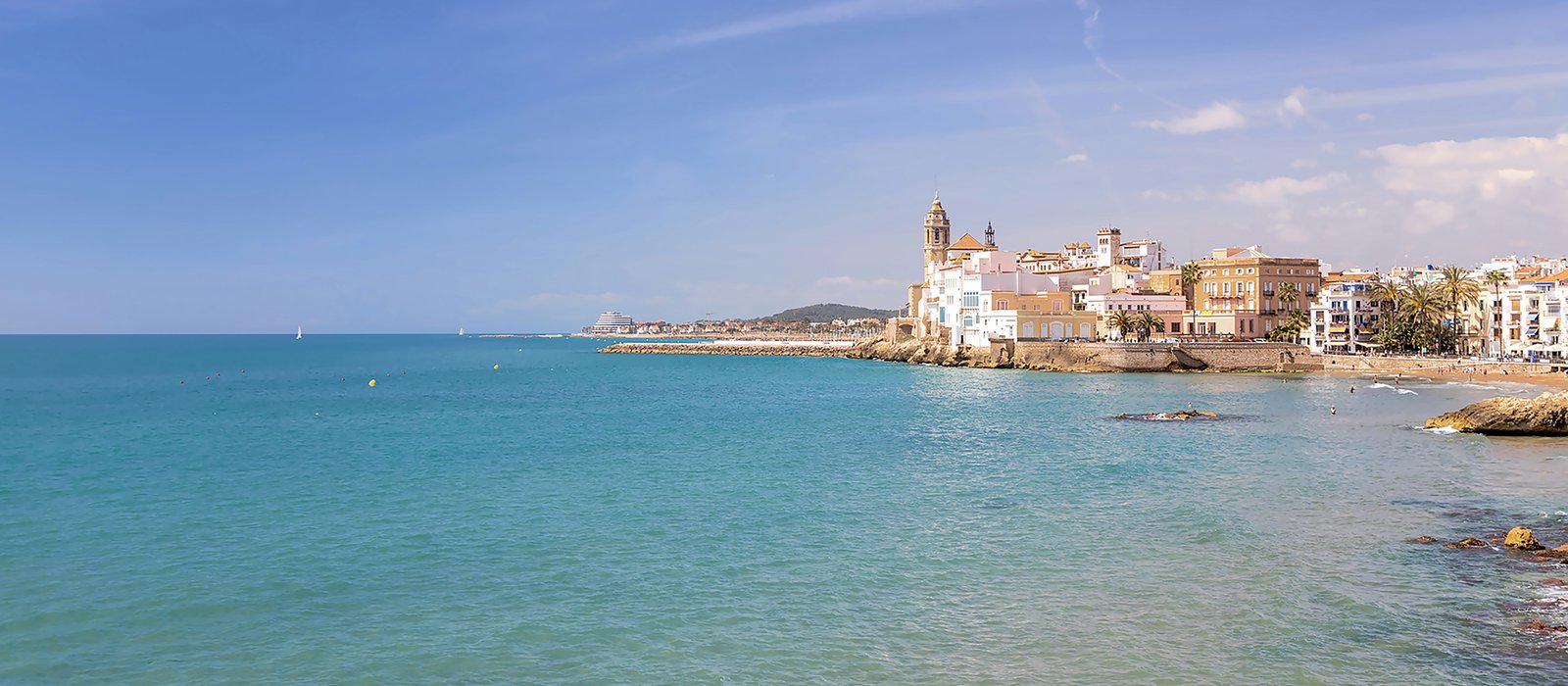
Sitges is the easiest beach escape from Barcelona — a pretty, walkable seaside town just 35–45 minutes south by commuter train, with a whitewashed old town, a dramatic hilltop church over the water, and 17 beaches. It's the day trip for when you want the Mediterranean without the effort: no car, no advance booking, just hop a train and you're there. This guide covers getting there, what to do, and how to spend a perfect low-effort beach day.
Barcelona → Sitges — 35 minutes down the coast
Barcelona Sants — Main long-distance train station
Sitges — Beach town, 35 min south by train
Getting there: genuinely easy
Sitges is the simplest train day trip from Barcelona:
Take the Rodalies R2 Sud line from Barcelona Sants, Passeig de Gràcia, or Estació de França — about 35–45 minutes, with trains every 15–30 minutes. No advance booking; just buy at the station and go.
Cost is around €4.60 one-way (about €9.20 round trip). Sitges is in Zone 3, so a T-casual or other transit card must cover that zone.
Watch the platform board: catch the R2 Sud (toward Vilanova / Sant Vicenç de Calders), not the R2 Nord — boarding the wrong R2 is the classic mistake.
From the station it's a flat, pretty 10-minute walk downhill to the beach and old town — no local transport needed.
What to do in Sitges
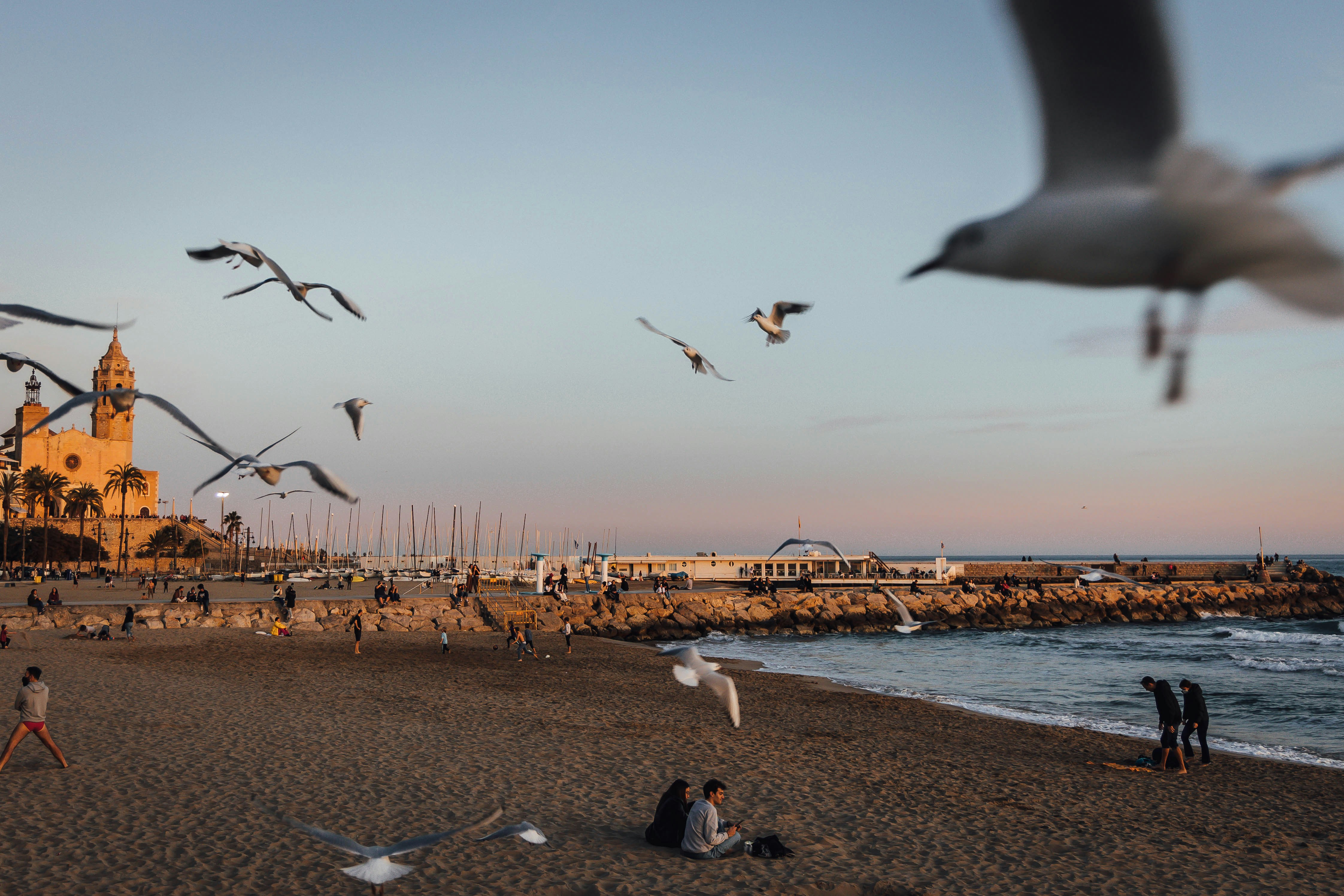
The beaches. Sitges has around 17 beaches, from the lively central Platja de la Ribera and Platja de Sant Sebastià to quieter coves further out. They're cleaner and calmer than Barcelona's city beaches — the main draw for most day-trippers.
Església de Sant Bartomeu i Santa Tecla. The iconic 17th-century church on a promontory over the sea — the town's signature image and a stunning viewpoint. Walk around it, not just to it; every angle is worth seeing.
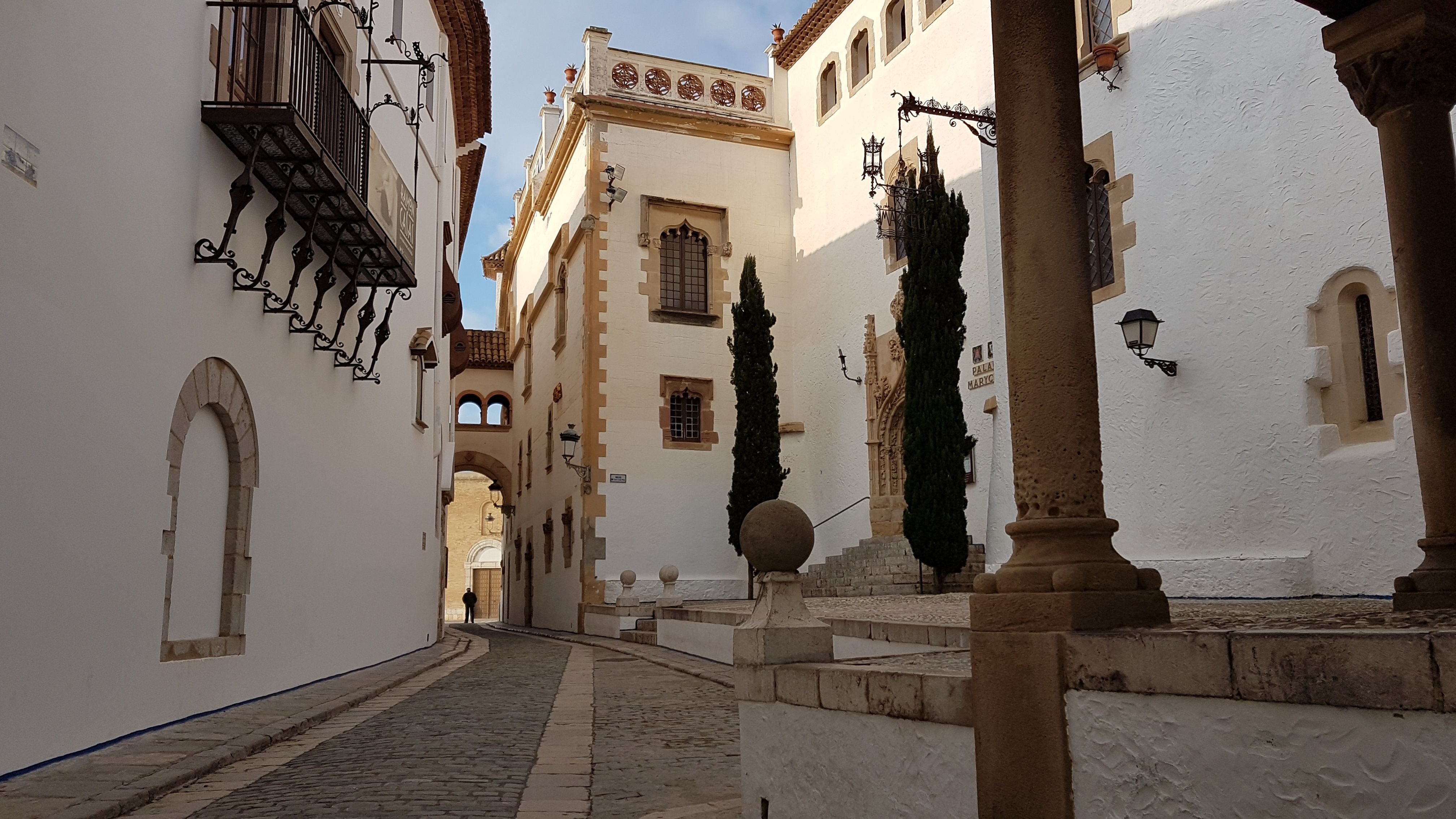
The old town. Whitewashed lanes, flower-draped balconies, and boutiques behind the seafront — genuinely charming to wander.
Modernisme and museums. Sitges was an artists' haven; the Cau Ferrat museum (the former home of artist Santiago Rusiñol) and Modernista mansions reward the culturally curious a few streets inland.
The seafront promenade (Passeig Marítim). A palm-lined stroll along the water, perfect at sunset.
Sitges as Spain's most open beach town
Sitges is famous as one of Europe's most LGBTQ+-friendly destinations — a long-standing, openly welcoming resort with a vibrant scene, lively beach bars, and a calendar of celebrated events. That open, easygoing spirit shapes the whole town's relaxed, inclusive feel, whoever you are. Two events are worth planning around (or avoiding, depending on your taste): the Sitges Carnival (February–March), one of Spain's most flamboyant, and the prestigious Sitges International Fantastic Film Festival (October), a major horror-and-fantasy film event that fills the town.
A perfect Sitges day
The classic rhythm: morning train down, claim a beach spot before the midday crowds, swim and sunbathe, then a long seafood lunch by the water. In the afternoon, when the sun is strongest, retreat into the shaded old-town lanes — the church, a museum, the boutiques — before an early-evening promenade stroll and the train back. It's an unhurried, low-effort day, which is exactly the point; Sitges is where you go to slow down, not to tick off sights.
Choosing your beach in Sitges
Sitges has around 17 beaches, and they vary enough that it's worth knowing the options. The central Platja de la Ribera and Platja de Sant Sebastià, right by the old town, are the most convenient — steps from the church and the cafés, lively and easy, ideal if you want to combine beach and town without walking far. Head a little further and the beaches thin out and quiet down. Sitges is also long known for its open, inclusive scene, and certain beaches (like the Platja de la Bassa Rodona area) are traditionally the heart of the gay beach scene, while others further out are calmer and more family-oriented. Because the town is compact, you can easily sample a couple in one visit — start central for convenience, then wander down the promenade to find a quieter stretch if the main beaches get busy. Whichever you pick, the water is calmer and cleaner than Barcelona's city beaches, which is much of why Sitges is worth the trip.
Practical tips
No need to book the train — turn up and go; it runs frequently until late.
Bring beach kit — towel, sunscreen, water; there are plenty of beach bars but it's cheaper to come prepared.
Go early in summer — Sitges is popular and the central beaches fill up; mornings are calmer.
Shoulder season is lovely — late spring and early fall give you the town at its most relaxed, with warm-enough water and thinner crowds.
Confirm your zone — Sitges is Zone 3; make sure your ticket covers it (a single is simplest for a one-off trip).
Half-day or full day — you can see the essentials in a half-day, but Sitges rewards a slow full day by the sea.
FAQ
How do I get from Barcelona to Sitges?
Take the Rodalies R2 Sud train from Barcelona Sants, Passeig de Gràcia, or Estació de França — about 35–45 minutes, every 15–30 minutes, around €4.60 one-way. No advance booking; buy at the station. Watch that you board the R2 Sud, not the R2 Nord.
Is Sitges worth a day trip?
Very — it's the easiest beach escape from Barcelona, with cleaner, calmer beaches than the city, a charming whitewashed old town, a dramatic hilltop church, and a relaxed seaside pace, all a short train ride away.
How much time do I need in Sitges?
A half-day covers the essentials, but Sitges rewards a slow full day — beach in the morning, seafood lunch, old town and museums in the afternoon, and a sunset promenade before the train back.
What is Sitges known for?
Its beaches (around 17 of them), the iconic seafront church, a charming Modernista old town, and being one of Europe's most LGBTQ+-friendly resort towns, with a famous Carnival and the Fantastic Film Festival.
When is the best time to visit Sitges?
Late spring and early fall for warm water and thinner crowds, or summer for the full beach scene (go early as it fills up). Carnival (Feb–Mar) and the October film festival are lively but busy times.