Girona is the day trip that makes you wonder why you didn't give it two days. A 38-minute high-speed train from Barcelona drops you into one of Catalonia's best-preserved medieval cities: an intact old quarter of stone lanes, a Jewish quarter among Europe's finest, a cathedral with the widest Gothic nave on earth, and the colorful riverfront houses fans of a certain dragon show will recognize instantly. It's the easiest, highest-reward day trip from Barcelona — here's how to do it.
Getting there: fast train or cheap train
Trains leave from Barcelona Sants and the choice is speed versus price:
High-speed (AVE / AVANT): about 38 minutes. The AVANT fare is the smart pick — roughly €17 one-way versus the pricier AVE, same speed. Book ahead on Renfe; high-speed seats are reserved and the cheap ones sell out.
Regional (R/MD or R11): about 1h20 and roughly €11, no reservation needed — buy at the station. Slower but flexible and cheaper.
A popular move: take the fast train out to maximize your day, then a cheap regional train back when you're tired and time-rich. Either way, the Girona station is about a 10-minute walk from the old town — no taxi needed. All fares are current ballparks; confirm on Renfe at booking, since high-speed pricing is dynamic.
What to do in Girona
Barcelona → Girona — 40 minutes by fast train
Barcelona Sants — Main long-distance train station
Girona — Medieval walls, 40 min by fast train
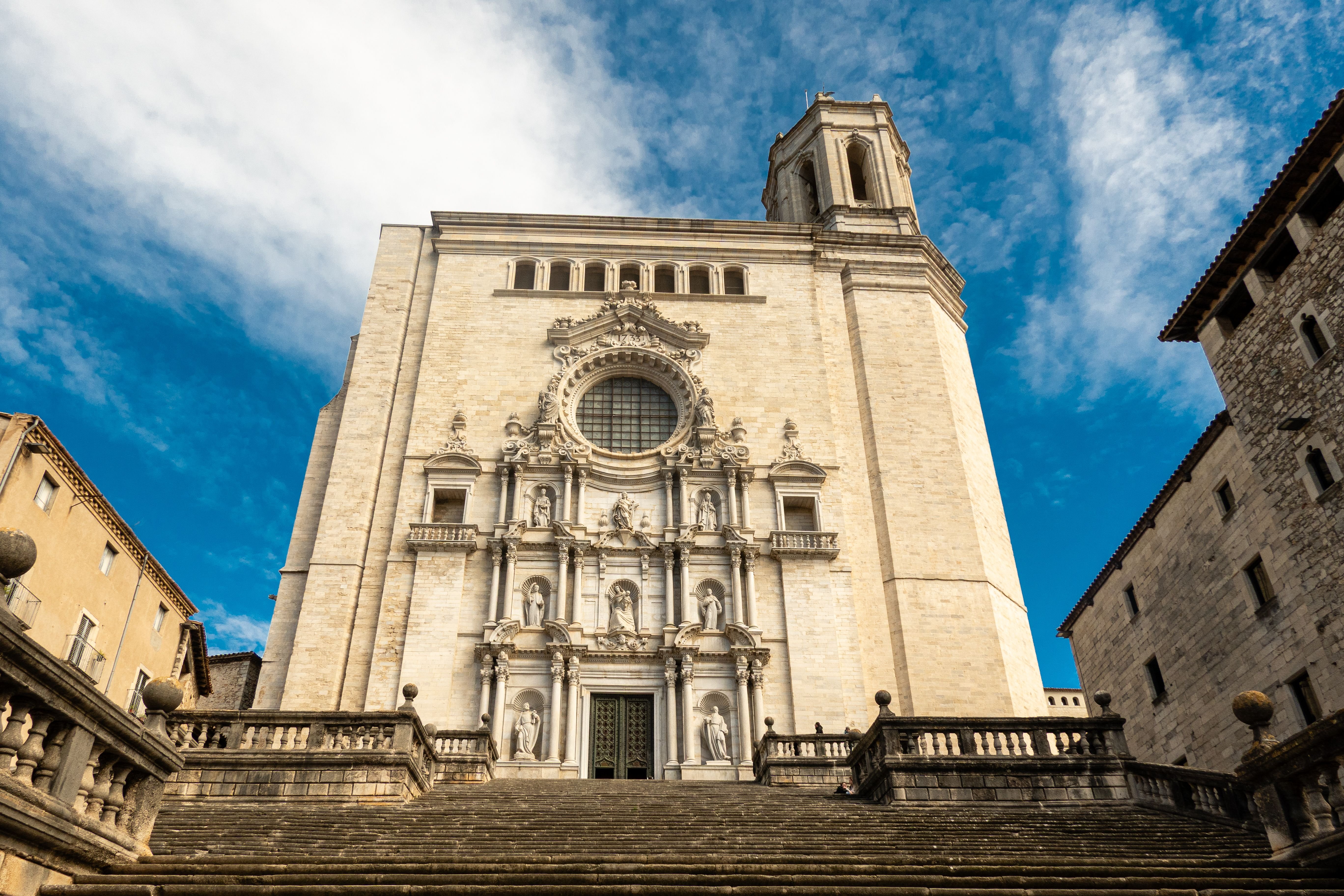
The Cathedral steps. The grand staircase up to the cathedral is the city's signature image (and a Game of Thrones location); inside is the widest Gothic nave ever built.
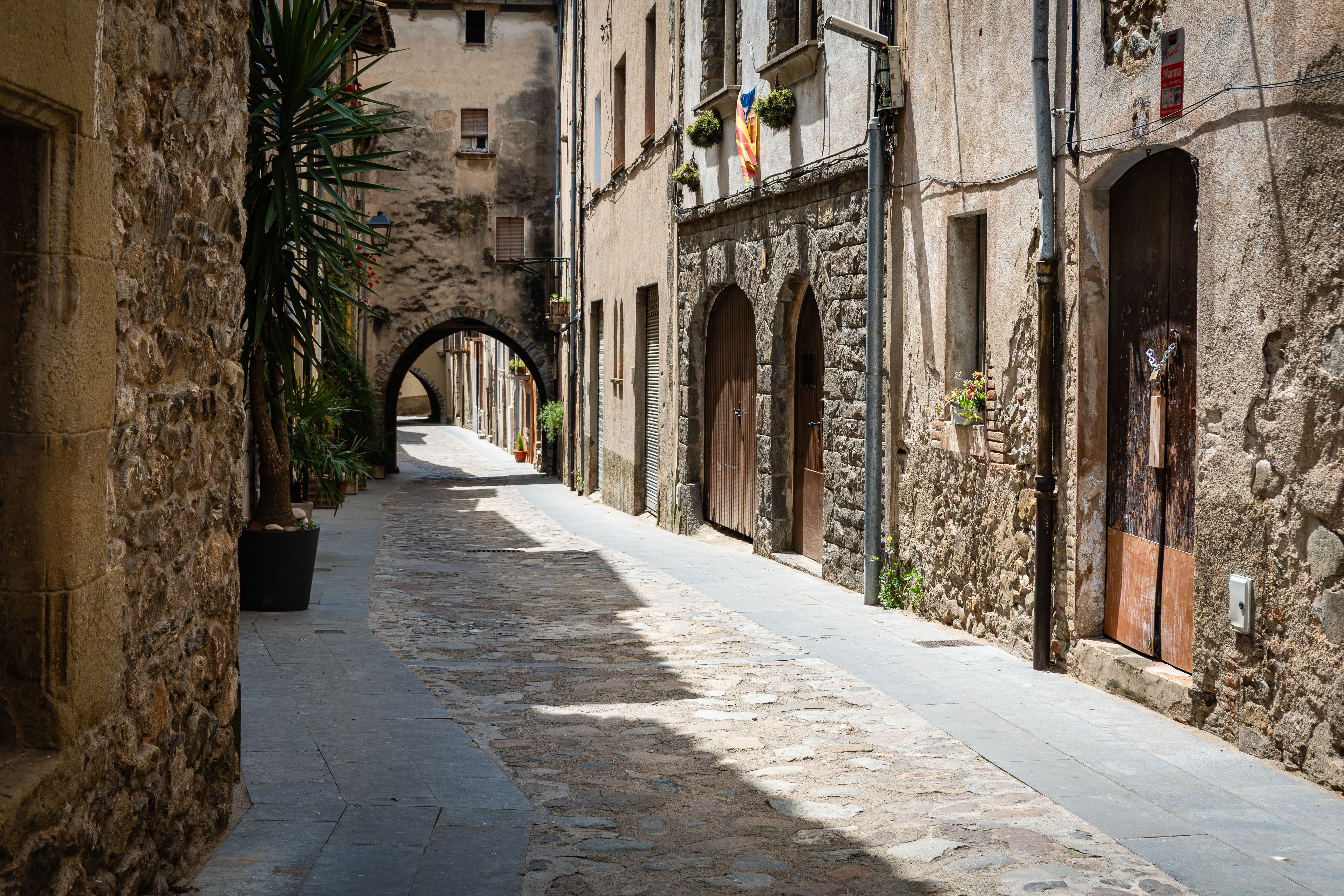
El Call, the Jewish Quarter. A labyrinth of narrow stone lanes and stairways, one of the best-preserved medieval Jewish quarters in Europe — wander without a map and let it surprise you.
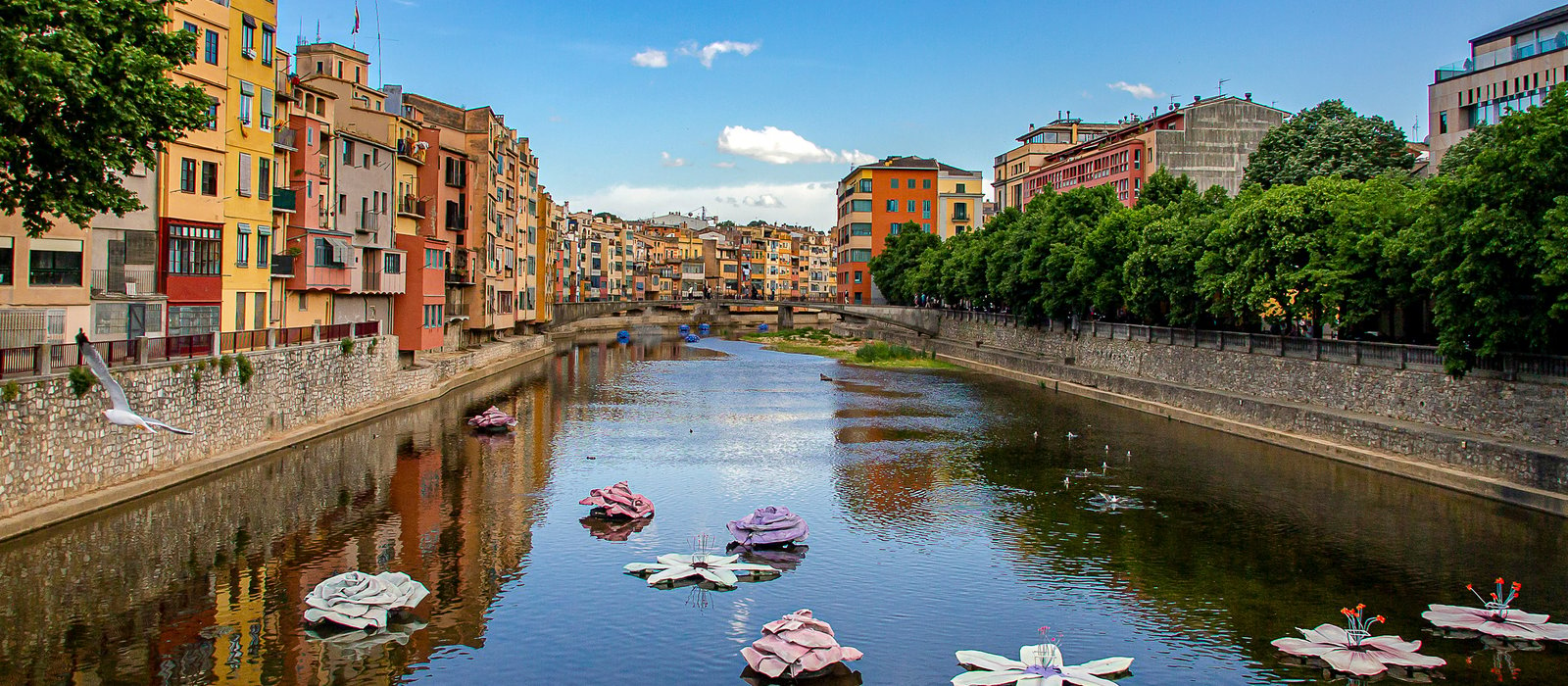
The Onyar houses. The row of ochre, red, and yellow houses overhanging the river, best photographed from the Pont de Pedra or the red Eiffel bridge (yes, that Eiffel).
The city walls. Walk the Passeig de la Muralla along the medieval ramparts for views over the rooftops to the Pyrenees foothills.
Arab Baths and monasteries. The 12th-century baths and the Romanesque Sant Pere de Galligants round out a half-day of wandering.
How long, and pairing it
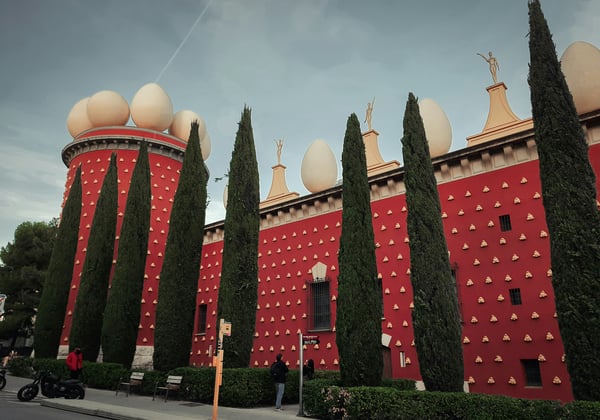
Girona's old town is compact and walkable — a relaxed day (or even a long half-day) covers it without rushing. Because the same high-speed line continues to Figueres (15 more minutes), serious day-trippers pair Girona's morning with the Dalí Theatre-Museum in the afternoon — two of Catalonia's best sights on one train line. If you'd rather slow down, Girona alone, with a long lunch in the old town and time on the walls, is a complete and satisfying day.
A little context to see more
Girona's layered look comes from a long, contested history: Roman foundations, a brief early-medieval moment of Muslim control before it passed to the Frankish-ruled Spanish March, then centuries as a Christian frontier city besieged again and again — locals proudly call it the "city of a thousand sieges." That past is why the walls are so massive, why the Jewish quarter survived so intact (the community thrived here for 600 years before the 1492 expulsion), and why the cathedral was built to dominate the skyline. You don't need a guided tour to enjoy the wandering, but knowing the city was a crossroads of Roman, Jewish, Moorish, and Catalan worlds makes every stone lane read as more than just pretty. The small Museum of Jewish History does a quiet, moving job of telling the El Call story if you want to go deeper.
Practical tips
Book high-speed ahead for the cheap fares; regional trains you can buy day-of at the station.
Your Barcelona transit card doesn't cover this trip — it's an out-of-zone journey needing its own ticket.
Go for the wander, not a checklist. Girona rewards aimless exploring more than ticking sights; the old town itself is the attraction.
Eat well. Girona is a serious food city — the region produced one of the world's most celebrated restaurants — so even a casual old-town lunch tends to overdeliver. Look for menu del día deals on weekdays, and don't leave without trying something with the local Empordà touch.
Combine smartly. If you're pairing Girona with Figueres, do Girona first thing (it's the bigger wander) and Figueres after lunch, since the Dalí Museum is a contained visit and the same high-speed line links them in 15 minutes.
Comfortable shoes. It's all cobblestones, stairs, and ramparts.
Best time to go: spring and fall are ideal for walking the walls in comfort; summer is hot and busier, though Girona never gets as mobbed as Barcelona's headline sights. Early trains give you the old town at its quietest, before the day-trip groups arrive mid-morning.
With kids: the walls, the colorful river houses, and the maze of lanes are genuinely fun for children, and the compact, mostly car-free old town makes it low-stress — pack water and let them lead the wandering.
FAQ
How do you get from Barcelona to Girona?
High-speed AVE/AVANT trains from Barcelona Sants take about 38 minutes (AVANT ~€17 one-way is the value pick); slower regional trains take ~1h20 for around €11. The station is a 10-minute walk from the old town.
Is Girona worth a day trip?
Very much — it's arguably the best effort-to-reward day trip from Barcelona: an intact medieval old town, a famous cathedral and Jewish quarter, and the colorful riverfront, all an easy train ride away.
How much time do I need in Girona?
A relaxed day or a long half-day covers the compact old town. With a full day, you can pair it with the Dalí Museum in Figueres, 15 minutes further on the same high-speed line.
Do I need to book the train in advance?
For high-speed (AVE/AVANT), yes — seats are reserved and cheap fares sell out. Regional trains need no reservation; buy them at the station, including for the return.
Is Girona the Game of Thrones city?
Partly — several scenes were filmed on the cathedral steps and in the old town, alongside Girona's many other historic draws. You don't need to be a fan to love the medieval streets.